If you’re planning a custom home or a major renovation, you’ve probably asked (or typed into Google) what is design build, and whether it actually makes things easier. We hear that question often, usually right after a homeowner has spent weeks gathering inspiration and then realizes the real challenge is not taste, it’s coordination. The delivery method you choose sets the tone for everything that follows, including how decisions are made, how costs are tracked, and how smoothly the overall custom home building process unfolds.
At its simplest, what is design build means design and construction live under one roof, guided by one team, with one contract and one clear point of accountability. But in our world, the value is not the contract language. The value is how early alignment changes the outcome. Design build lets you make big decisions with real information, not assumptions, and that reduces the kind of late-stage redesigns that can quietly derail both budget and timeline.
This guide explains the design build meaning in plain language, then goes deeper into what changes behind the scenes when a project is truly integrated. Along the way, we’ll share the kinds of real-life moments that make design build feel different, because “this is how we do it” matters just as much as “this is what it is.”
What Is Design Build in Plain Language?
When homeowners ask what is design build, they’re usually trying to compare it to the traditional model they’ve heard about: hire a designer or architect, develop drawings, then shop those drawings to builders for pricing. Understanding the benefits of design build matters just as much as understanding the definition. In design build, you don’t split that responsibility. One firm is responsible for both the design work and the construction work, and the team collaborates from the start, similar to the way we approach designing a custom home.
That may sound like a small structural change, but it affects the daily experience in a big way. Instead of design moving forward on its own and cost showing up later as a surprise, design build keeps design, budget, and build strategy in the same conversation. This mirrors a well-run interior design process, where decisions are made with context rather than guesswork. When the team is unified, you get faster answers, clearer trade-offs, and fewer moments where you feel like you’re translating between two professionals who do not share the same priorities.
A simple way to think about it is this: in design build, the people drawing the plan are in regular conversation with the people responsible for building it. That sounds obvious, but it is not how many projects are set up.
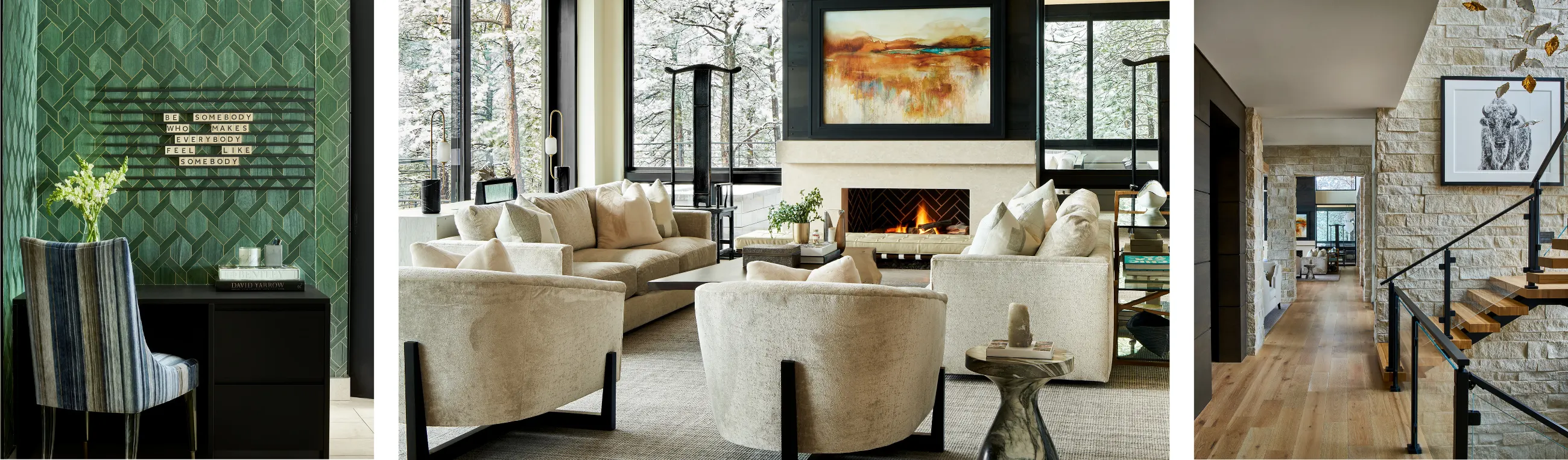
Understanding the Design Build
Meaning at a Deeper Level
The basic design build meaning is straightforward: one team owns both the design and the construction. The deeper meaning is about how information flows and when decisions happen.
In a traditional structure, it’s easy for a project to become “beautiful on paper” before it becomes “possible in the field.” The drawings can be complete, the design can be refined, and the homeowner can feel emotionally committed, before anyone has truly pressure-tested the plan against real budgets, real lead times, and real site conditions. Then pricing arrives, and the project has to back up. That backtracking is where time and trust get spent. These issues are often uncovered late in the design review process rather than addressed early.
In design build, cost, design, and build planning move together. As ideas develop, we evaluate feasibility in real time. That means you are not selecting materials, approving layouts, or committing to scope in a vacuum. You are deciding with context: what it costs today, what it will take to build well, what will impact the schedule, and what changes would actually move the needle.
This is why many homeowners say design build feels calmer. The decisions still matter, but they feel informed instead of rushed.
Why decision timing matters more
than most people expect
Most “budget surprises” are not caused by one big mistake. They come from a series of small assumptions that were never tested early enough.
Here’s a common scenario we see when construction input arrives late. A homeowner falls in love with a wall of steel windows, a flush base detail, and a very clean ceiling line with minimal soffits, with refined interior design concepts. Those are all achievable, but they also affect structure, mechanical routing, insulation strategy, and the labor time required to execute cleanly. If that conversation happens after drawings are finished, the project can turn into a redesign cycle: adjust window sizes, rework elevations, revise structural engineering, update mechanical plans, then reprice.
In a design build process, we would talk about those choices while the design is still flexible. We can show what is driving cost and what is driving complexity, then help you decide what matters most. Sometimes the answer is “we keep it,” and sometimes the answer is “we keep the feeling but change the approach.”
Real-time cost modeling is not a sales tactic,
it’s a planning tool
Homeowners often ask us, “Does design build mean we’ll see numbers sooner?” In a well-run design build model, yes. Costs should be part of the design conversation early, not introduced at the end as a verdict.
This is where the difference becomes practical. If we’re developing a kitchen concept and you are considering a fully integrated appliance package, custom millwork with concealed storage, and a stone that requires bookmatching, we can talk about cost drivers as those decisions are being made. You can choose where to invest and where to simplify, without losing the overall vision.
It’s not about turning the project into a spreadsheet. It’s about protecting the design from late-stage compromise. When cost modeling happens during design, you can shape the plan with intention instead of cutting under pressure. When we’re developing spaces like kitchens or primary suites influenced by luxury home interior design ideas, we discuss cost drivers as decisions are made.
Shared responsibility changes
how problems get solved
Another key part of the design build meaning is shared responsibility. In a split model, it’s common for homeowners to hear some version of “that’s not in my scope,” or “that’s how it was drawn,” or “that’s a change order.” Even with good people, the structure can invite defensiveness, because everyone is protecting their lane.
In design build, the team owns the outcome together. That tends to shift the tone. When there is a conflict between design intent and construction reality, we solve it in-house, then bring you a clear recommendation. You should not have to referee.
No model removes all changes, because homes are personal and existing conditions can be unpredictable. What design build can do is reduce preventable change by catching conflicts early and by making scope decisions clear before drawings are finalized. This is one of the reasons clients working with full-service interior designers often prefer integrated teams.
Why More Homeowners Are Asking
What Is Design Build
The rise in searches for what is design build is not just curiosity. It’s a response to the current building environment.
Construction costs have risen significantly since 2020, and many markets have experienced long lead times for windows, cabinetry, and specialty finishes. Even when supply chains stabilize, the ripple effect of labor availability and permitting timelines remains. Homeowners feel that pressure quickly, especially when a project involves custom details and high expectations.
In this context, coordination becomes a form of risk control. When the team is integrated, you can make decisions with a clearer view of time and cost. When the team is fragmented, you are often learning key information later than you want.
We also see another trend: homeowners are more design-literate than ever. They have strong points of view, they’ve saved references for years, and they want their home to feel personal, not generic. That level of customization requires tighter alignment, not looser, especially for clients seeking timeless interior design rather than trend-driven results.
How the Design Build Process Works, the Way We See It
Many articles describe design build as a sequence of phases. That is true, but the more important difference is what happens inside each phase. Here’s how it tends to play out when design and construction truly work together.
Phase 1: Discovery that starts with how you live
Before we talk about finishes, we talk about patterns. How you move through the day. Where your mornings feel rushed. How you host. What you wish worked better in your current home. We also talk about legacy goals, because many of our clients are building a home they plan to keep, not a home they plan to flip.
This is where we start answering quiet questions that rarely make it into plans: Do you need a back-of-house entry that keeps daily life discreet? Does your kitchen need to work for catered events as well as Tuesday night dinner? Are you planning for aging in place, visiting grandkids, or multi-property living?
At the same time, our build team is looking at the site and the realities that will shape the project: access, grading, drainage, existing utilities, and early permitting considerations. Design is not separate from those conditions, it responds to them.
Phase 2: Concept design with early
construction input
This is where homeowners often feel the shift. In concept design, you’re exploring layout, massing, and overall direction. In a traditional model, the design team might develop several options and refine one, then send it out for pricing later.
In design build, we review concepts through a construction lens as they evolve. We look at structural spans, roof complexity, window counts, mechanical zones, and material implications. That does not mean we design by cost alone. It means we understand what each move will require in the field.
Here is a concrete example. A client wanted a very clean ceiling plane with minimal visual breaks, plus a strong lighting plan with layered scenes. In early concept work, we coordinated the lighting intent with mechanical routing. That allowed us to adjust soffit locations and ceiling heights in a way that preserved the look while avoiding late-stage conflicts, the kind that can trigger rework once framing begins.
Phase 3: Design development that protects
the budget and the details
This phase is where drawings become real, and where choices carry weight. If cost is not actively tracked here, it becomes harder to control later.
In our process, we treat cost modeling as a parallel track to design development. When a detail increases complexity, we name it. When a material choice affects lead times, we name it. When a scope line is fuzzy (for example, who is responsible for site walls, specialty metal, or landscape lighting infrastructure), we resolve that before it becomes a construction conflict.
This is also the phase where interior design integration matters. If the cabinetry design depends on exact appliance specs, or if the stone layout depends on slab selection, we plan for those decisions with timing in mind. A beautiful kitchen is not just a mood board, it is a sequence of decisions that must happen in the right order.
Phase 4: Construction that stays aligned
with design intent
During construction, design build should feel like continuity, not a handoff.
Because our designers and builders are already working together, field questions get answered faster. When a condition in the field requires adjustment, the solution is not “figure it out later.” The solution is evaluated against the design intent, the budget, and the schedule, then communicated clearly.
One of the most practical benefits homeowners feel is fewer “surprise meetings.” You still have decisions to make, but they are planned decisions, not emergency decisions.
Design Build vs Traditional Construction:
What Changes for You?
Homeowners often ask if design build is simply a different contract structure. It is, but the bigger change is how much you have to manage.
In a traditional model, the homeowner often becomes the connector between designer and builder. Even if you are not trying to “manage” the project, you end up carrying questions back and forth. That can work when the team is highly aligned and communication is strong. It can also become exhausting, especially when the project is complex.
In design build, the team manages internal coordination. You stay involved in key decisions, but you are not responsible for keeping two separate entities aligned. Accountability is clearer, and communication usually becomes more streamlined.
What Design Build Looks Like in Colorado, Operationally
Colorado is its own environment. If you are building in places like Denver, Boulder, or mountain communities, the design build advantage becomes even more practical because the local realities are not theoretical.
Climate and elevation change how we think about building assemblies. Freeze-thaw cycles affect exterior materials and detailing. Snow loads and ice dams shape roof design. High UV at elevation can be hard on certain finishes. Hail is not a rare event in many Front Range areas, which makes roofing and exterior durability choices more than an aesthetic discussion.
Soils also matter. Expansive soils are common in parts of Colorado, and they influence foundation strategy and drainage planning. Wildfire considerations can affect material selection and site planning in many foothills and mountain zones, especially where defensible space and ignition-resistant assemblies are part of the conversation.
Permitting realities vary by jurisdiction and can affect timelines in real ways. A design build team that understands local review processes can plan decision timing around those constraints, rather than discovering them midstream.
This is where we find design build becomes more than an efficiency model. It becomes a clarity model. When climate, site conditions, and permitting shape the project, integration is not a luxury, it is a safeguard.
Common Misunderstandings
About What Is Design Build
Even homeowners who are drawn to the idea still have fair questions about what is design build.
Some worry it limits design creativity. In practice, we often see the opposite. When you understand cost and constructability early, you can design with more confidence. The “no” moments happen earlier, when they are easier to solve, and that protects the design from late-stage compromise.
Others worry they will lose an advocate if one team does everything. The truth is, it depends on how the firm is structured. In a strong design build team, roles are clear. Design leadership protects design intent. Construction leadership protects execution and quality control. The value is that those leaders sit at the same table, sharing information and resolving issues before they become homeowner stress.
Another misconception is that design build eliminates change orders. It does not. What it can do is reduce the number of avoidable changes that come from misalignment. When scope is clear, details are coordinated, and pricing is tracked during design, there are fewer “we didn’t realize” moments.
Frequently Asked Questions
About What Is Design Build
What is design build, and why do homeowners choose it?
What is design build is a project delivery model where one team handles both design and construction. Homeowners often choose it because it simplifies communication, improves coordination, and creates clearer accountability across the full project.
What does the design build meaning imply for budgets?
The design build meaning includes earlier cost visibility. Instead of waiting until design is complete to learn what it costs, many design build teams track cost during design. That helps homeowners prioritize intelligently and avoid late-stage redesign.
Is design build faster than the traditional model?
It can be, especially when early coordination reduces rework and bidding cycles. The bigger advantage is often predictability. When decisions are planned and conflicts are resolved early, timelines tend to feel more stable.
Can I still get a highly customized home with design build?
Yes. In many cases, design build supports customization better because designers and builders coordinate details early. That matters for complex millwork, custom lighting, specialty materials, and the kind of “quiet precision” that defines high-end residential work.
What is design build like during construction?
What is design build during construction is continuity. The same team that shaped the design stays engaged, and field questions are handled with the design intent in mind. Homeowners usually experience fewer handoffs and clearer communication.
When is design build not the best fit?
Design build may not be the best fit if you already have complete construction documents and prefer to bid the project widely, or if the scope is small enough that full integration is not necessary. The key is choosing the model that matches the complexity and goals of your project.
What Is Design Build, and Why Early Engagement Matters
If you take one idea from this, let it be this: what is design build is not just a different way to hire a team. It is a way to engage earlier, with better information, so your project stays aligned as it becomes real.
Early engagement matters because it is where the biggest risks are easiest to manage. Budget can be shaped before drawings are final. Scope conflicts can be resolved before they become construction disputes. Material and lead-time realities can be addressed while there is still flexibility. When those conversations happen late, the project can still succeed, but it often succeeds through compromise.
If you’re considering a custom home or major renovation and want a process grounded in clarity, craftsmanship, and long-term value, we’re happy to talk through what design build would look like for your specific project. You can learn more about our integrated approach, or contact us to start a thoughtful, early planning conversation.