Choosing between a spec home vs custom home is one of the most consequential housing decisions you will make, not just because of how the home looks on day one, but because of how it supports your life over time. We see this choice come up often with our clients, especially those who value quality, longevity, and a sense of calm in their living environments, many of whom are already familiar with the broader custom home building process.
Many articles frame the spec home vs custom home decision as speed versus personalization. In our experience, that framing is incomplete. The real difference shows up in how decisions are made, how early clarity is established, and how well the home aligns with the way you actually live. This guide is meant to offer a clearer, more experience-driven perspective, including an honest answer to what’s a spec home, where compromises tend to surface, and how long-term value is created or quietly lost through early pre-construction planning.
Understanding the
Spec Home vs Custom Home Choice
At its core, the spec home vs custom home decision comes down to authorship. Who is shaping the home, and at what stage?
A spec home is built without a specific buyer in mind. The builder selects the lot, defines the layout, chooses finishes, and manages construction based on what they believe will appeal to the broadest audience. By the time you walk through the door, most meaningful decisions are already behind you, including many tied to layout and systems that are typically addressed during the design review process in custom projects.
A custom home begins with you. The architecture, layout, materials, and construction strategy are shaped around your priorities, your routines, and your long-term plans. Decisions are made earlier, when they are easier to influence and less costly to adjust, especially when design and construction move together through a design build approach.
Both approaches can result in beautiful homes. The difference lies in alignment. One is designed to sell efficiently. The other is designed to live in intentionally.
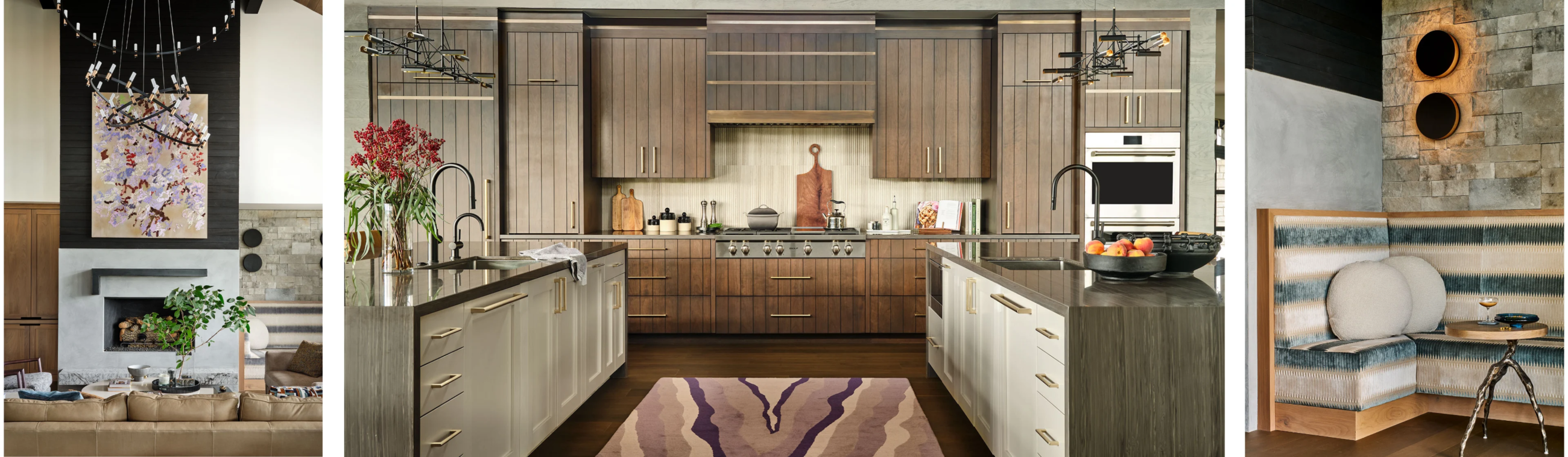
What's a Spec Home?
To answer the question clearly, what’s a spec home: it is a speculative build, meaning the home is constructed before a buyer is identified. The builder assumes the risk, designs the home based on market demand, and brings it to market once it is complete or near completion.
Spec homes are common in fast-growing cities, resort markets, and established neighborhoods where demand is predictable. In the United States, roughly a quarter to a third of new homes are built this way, with higher concentrations in markets where finished inventory moves quickly.
From a buyer’s perspective, the appeal is straightforward. You can tour the home, experience the light, understand the layout, and move forward without a long design or construction timeline. There is comfort in that certainty.
What is less visible is how much has already been decided for you, including choices that would normally be explored during the interior design process in a custom home.
How Spec Homes Are Designed and Built
Spec homes are typically designed for efficiency, predictability, and resale confidence. Builders rely on plans that have performed well before. Materials are chosen for availability and pricing stability. Timelines are managed tightly to reduce carrying costs.
In practice, this often results in:
- Neutral finishes that appeal to a wide range of buyers
- Layouts that photograph well and feel open during a tour
- Standard ceiling heights and window sizes that simplify construction
- Material selections that balance appearance with cost control
This does not mean spec homes are poorly built. Many are executed at a high level. It does mean that design decisions are rarely personal. They are strategic. These choices often reflect broad interior design concepts rather than decisions tailored to a specific household.
Once construction begins, flexibility drops quickly. Structural elements, mechanical systems, and core layouts are locked early. By the time a buyer becomes involved, changes are usually limited to surface-level adjustments, if any.
Why Buyers Choose Spec Homes
In the spec home vs custom home conversation, spec homes often appeal to buyers who value clarity and speed.
They work well for those relocating on a firm timeline, purchasing a second home, or preferring a more contained decision-making process. There is also reassurance in seeing exactly what you are buying, rather than interpreting drawings or imagining finished spaces.
For some homeowners, that immediacy and certainty outweigh the desire for customization.
The Tradeoffs That Surface After Move-In
Where spec homes tend to reveal their limits is not on closing day, but months or years later.
Because spec homes are designed for broad appeal, they can lack specificity. Storage may technically be adequate, but poorly located. Kitchens may look balanced, yet function awkwardly once daily routines set in. Primary suites may feel generous, but closets may not support how clothing is actually stored.
Mechanical and structural decisions are also made long before you arrive. HVAC zoning, sound insulation, ceiling heights, and lighting layouts are chosen to meet typical expectations, not your preferences.
We often see spec home owners renovate within the first few years, not to change the look, but to fix function. Kitchens, mudrooms, lighting plans, and closets are common areas of adjustment. That does not make spec homes a poor choice. It simply means they should be evaluated with a long-term lens.
What Makes a Custom Home Truly Custom
In the spec home vs custom home debate, custom homes are often reduced to finish selection. In reality, finishes are the smallest part of what makes a home truly custom.
A custom home becomes custom at the level of layout, flow, systems, and long-term performance. That work begins well before the first floor plan is drawn.
A helpful way to think about it is this: a spec home is a finished answer to a broad market question, while a custom home is a considered response to one specific household.
Custom Starts With How You Live
A custom home begins with understanding daily life. How you move through your home. How you host. How you retreat. How light, sound, and storage affect your comfort.
In early planning, our team often explores questions like:
- What needs to happen when you walk in the door with groceries, bags, or gear?
- Do you entertain often, and do you want guests to see the kitchen in action?
- How often do you work from home, and what level of privacy do you need?
- Where does noise travel in your current home, and where does it frustrate you?
- What storage problems do you live with today that you do not want to repeat?
These questions shape architecture. They determine where walls go, how circulation works, and how the home supports real life rather than idealized plans.
That is why custom is less about taste and more about fit.
Layouts That Follow Real Life
Spec homes are designed to appeal to many buyers at once. That often leads to layouts that feel impressive during a tour, but slightly inefficient once lived in.
Custom homes can be shaped around routines instead of assumptions. A kitchen may be planned in zones rather than symmetry. A primary suite may function as a private wing, with thoughtful separation and storage that actually works. Bedrooms may be organized along a quieter circulation path to reduce sound transfer. Mudrooms can become true working rooms, designed for climate, gear, pets, and daily drop zones.
These decisions may seem small, but together they create a home that feels composed on ordinary days, not just during gatherings.
Site-Specific Design That Improves Daily Living
One of the clearest advantages in the spec home vs custom home comparison is how the home responds to its site.
Spec homes are often designed to fit a lot efficiently. Custom homes can be designed to fit the land intelligently.
Site-specific planning considers sun angles, views, privacy, topography, wind, and weather patterns. In Colorado, those factors matter deeply. Orientation affects comfort, glare, and energy use. Grading decisions influence drainage and long-term durability. Window placement shapes both views and privacy.
Homes that work with their site tend to feel calmer and brighter. They also tend to perform better over time, because the design is responding to real conditions rather than forcing a generic plan onto a specific piece of land.
Materials Chosen for Performance
In a spec home, materials are often selected for broad appeal and availability. In a custom home, materials can be chosen based on how long you plan to live there, how much maintenance you want, and how the home will actually be used.
That can mean flooring selected for wear patterns and refinishing strategy, not just appearance. Exterior materials chosen for UV exposure, moisture, and freeze-thaw cycles. Tile and stone evaluated for slip resistance and maintenance. Cabinetry planned around storage behavior rather than showroom proportions.
Many homeowners underestimate the cost and disruption of correcting material decisions later. Custom planning allows those decisions to be made once, with clarity.
Systems Planned Early, Not Patched Later
One of the most overlooked differences in spec home vs custom home is what you cannot see.
In custom homes, systems can be designed intentionally rather than adjusted after the fact. HVAC zoning can reflect how spaces are used. Ventilation and filtration can support air quality and comfort. Lighting can be layered to support mood and function. Acoustic strategies can reduce noise transfer. Power and data can be placed where life actually happens.
The most comfortable homes we build are often the quietest and easiest to live in. That comfort comes from planning systems early, not from adding technology later.
Long-Term Planning and Legacy
Custom homes also allow for foresight. Many clients are building not just for today, but for the years ahead.
That does not mean creating a clinical environment. It means building flexibility into the structure. Main-level suites that can adapt. Circulation that remains comfortable over time. Thoughtful stair design and lighting. Storage that supports changing needs.
Planning early for these realities can prevent costly remodels later and support a home that continues to serve its owners as life evolves.
Questions We Hear Most Often
Is a custom home only for people who want something unique?
Not at all. Many custom clients want homes that feel quiet, timeless, and restrained. Custom is about precision and alignment, not novelty.
Can a spec home be made to feel custom later?
Furnishings, lighting, and selective built-ins can personalize a spec home. Structural and layout issues are far harder to change once construction is complete.
Is custom always more expensive?
Not necessarily. Custom budgets can be shaped around priorities. While upfront costs may be higher, long-term renovation and maintenance costs are often lower.
How much longer does a custom home take?
Spec homes are often move-in ready. Custom homes typically take 12 to 24 months from early planning through completion, depending on complexity and permitting.
Making the Right Spec Home vs Custom Home Decision
The spec home vs custom home decision is not about right or wrong. It is about alignment.
It asks how involved you want to be, how long you plan to stay, and how much control you want over the spaces you live in every day. A spec home can be the right choice when timing and simplicity matter most. A custom home can be the right choice when fit, longevity, and daily comfort are the priority.
If you are navigating this decision and want guidance grounded in both design and construction experience, we invite you to contact us for more information. The right home is the one that supports how you live now, and how you plan to live in the years ahead.