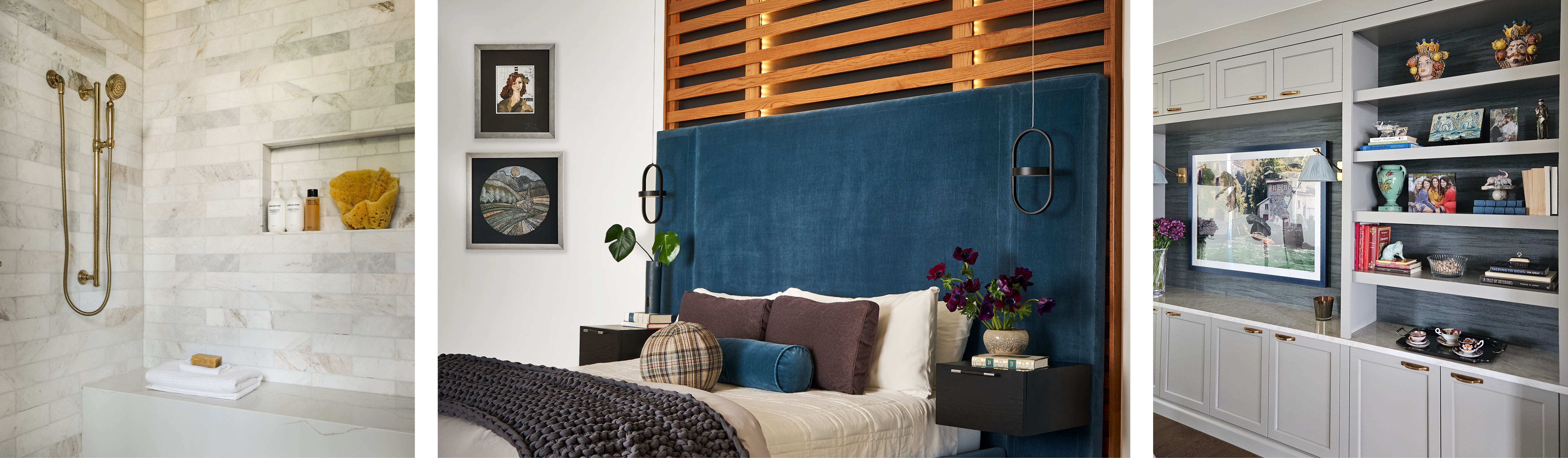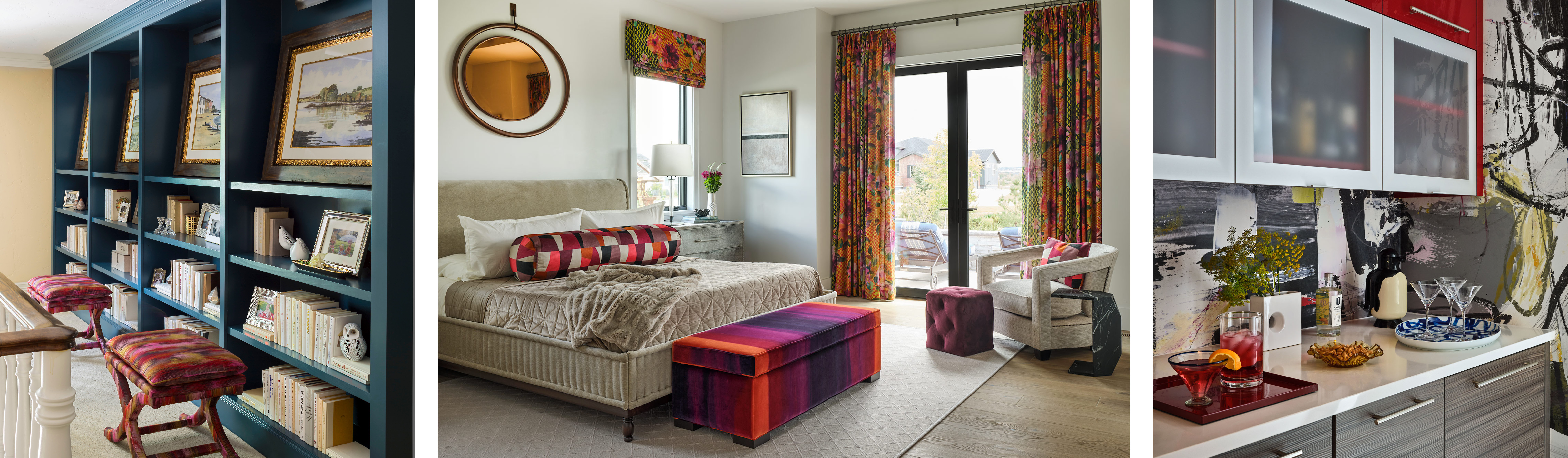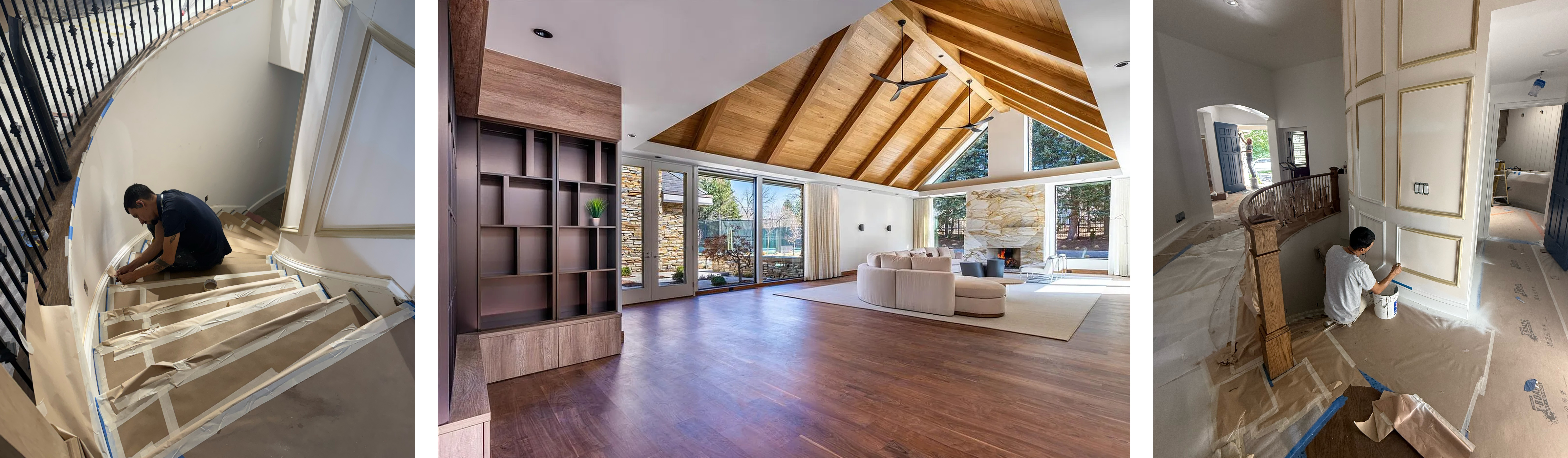
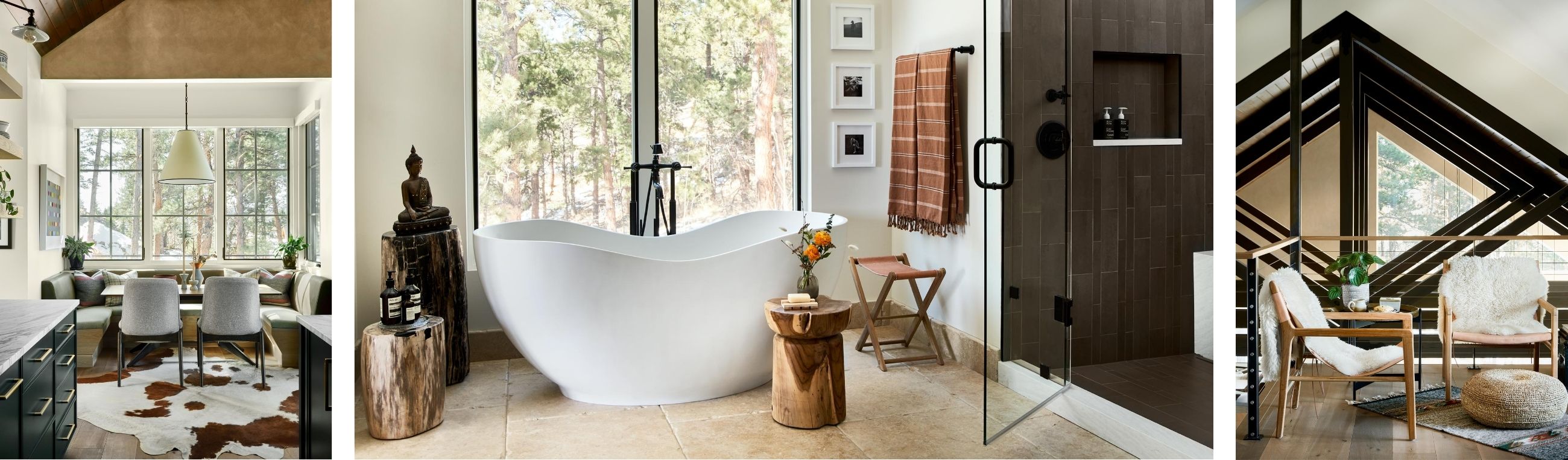
Scale and proportion in interior design shape how a home feels long before style or color comes into play. You may walk into a room and sense that something is off, even if you cannot name it. In most cases, the issue comes down to how objects relate to the space and to each other.
At its core, scale and proportion in interior design define balance. They guide how furniture fits within a room, how pieces interact, and how a space supports daily life. When handled with care, a home feels calm and complete. When overlooked, even high-quality furnishings can feel disconnected.
At Duet, design is guided by clarity, structure, and restraint. Every decision is made with intention, not impulse. That approach allows scale and proportion to lead, rather than follow, the design process.
What Is Scale and Proportion In Interior Design?
To understand how to use these ideas, it helps to break them down.
Scale refers to the size of an object compared to the room. A large sofa in a small space may feel overwhelming. A small table in a large room may feel lost.
Proportion looks at how objects relate to each other. It considers height, width, and visual weight across all elements in a space.
Together, scale and proportion in interior design create a sense of order. They allow a room to feel thoughtful rather than random.
Why This Matters More Than Style
Many people focus on finishes or trends. While those choices matter, they do not solve deeper issues.
A well-designed chair will not feel right next to a table that is too tall. A beautiful light fixture will not feel balanced if it is too small for the ceiling height.
When scale and proportion are correct, style becomes more effective. Without them, even strong design choices fall short.
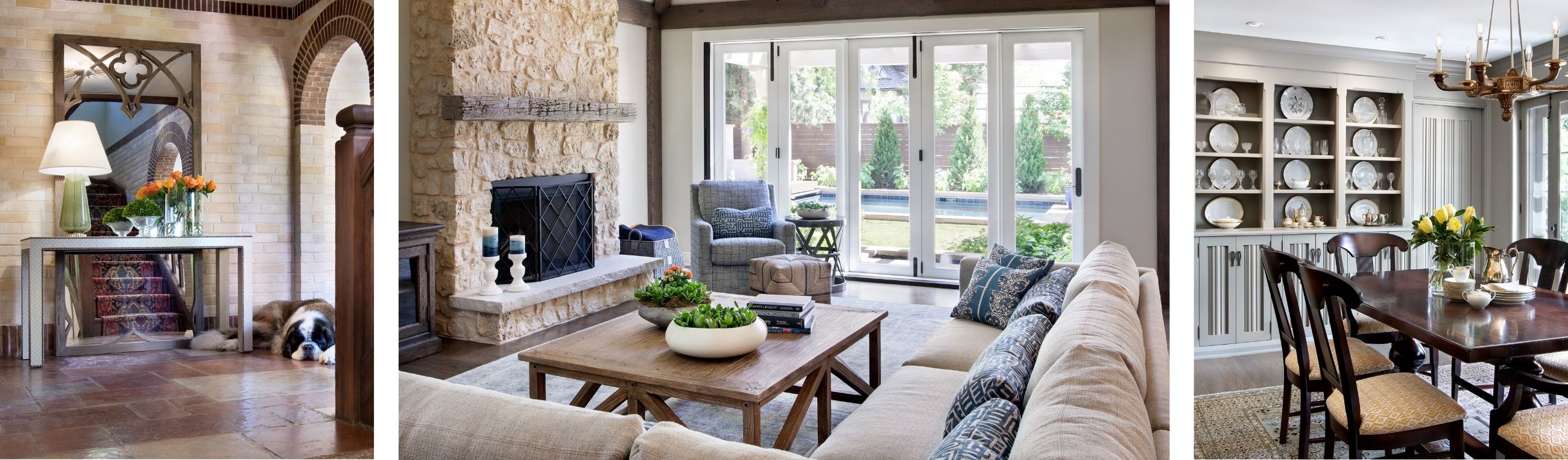
Understanding Scale In Interior Design
The idea of scale in interior design is often reduced to picking the right size furniture. In reality, it is more layered than that.
Scale works across several levels:
- How furniture fits the human body
- How objects relate to the room’s size
- How materials affect visual weight
Each level plays a role in how a space is experienced.
Human Scale and Comfort
A well-designed room supports how people live.
- Chairs should feel comfortable to sit in
- Tables should be easy to use
- Walkways should allow natural movement
If these basics are off, the room will never feel right, no matter how it looks.
Room Scale and Architecture
Architecture sets the tone for scale.
High ceilings call for taller or more substantial furnishings. Lower ceilings require restraint and thoughtful placement.
Working with the architecture, rather than against it, creates a more natural result.
The Role of Proportion In Interior Design
If scale is about size, proportion is about relationship.
Proportion focuses on how elements work together. It is less about exact measurement and more about visual balance.
How Proportion Creates Harmony
A room feels cohesive when elements share a common relationship.
- Furniture heights should feel aligned
- Spacing between pieces should feel consistent
- Shapes and forms should repeat in a subtle way
When these elements work together, the room feels settled.
Proportion Within Furniture Groupings
Even when furniture fits the room, groupings can still feel off.
- A low sofa next to a tall chair creates imbalance
- A small coffee table can feel weak among larger seating
- Side tables that vary too much in height disrupt flow
Proportion begins within small groupings before extending to the full room.
Scale and Proportion In Interior Design: The Framework Behind the Room
Strong interiors do not come together by accident. They are built on structure, and that structure often begins with scale and proportion in interior design. Before a room feels elegant, calm, or complete, it has to feel balanced. That balance is not only about choosing beautiful pieces. It comes from understanding how each item relates to the room, to the architecture, and to the other pieces around it.
This is why scale and proportion matter so much. They create the framework behind the room. They shape how the room is read by the eye and how it is experienced in daily life. When this framework is strong, a room feels natural and settled. When it is weak, the room may feel crowded, unfinished, or strangely flat, even if every object in it is attractive on its own.
Many people think design is mostly about style. Style matters, of course, but style alone cannot fix a room with poor balance. You can have beautiful finishes, custom furniture, and layered lighting, yet the room can still feel off if the sizes, spacing, and visual relationships are not working together. That is where scale and proportion in interior design become the real foundation.
What does it mean for scale and proportion to be the framework behind the room?
Think of the room as a composition rather than a collection of objects. Every interior contains a set of relationships. A sofa relates to the rug. The rug relates to the floor area. The chandelier relates to the ceiling height. The artwork relates to the wall. Each of those relationships either supports harmony or creates tension.
That is the framework. It is the quiet structure that holds the room together.
When designers talk about strong interiors, they are usually responding to this structure, even if they do not say it out loud. A well-designed room has rhythm. It has variation. It has places for the eye to rest and places for the eye to focus. It feels composed because the scale and proportion have been handled with care.
Why do some rooms feel finished while others do not?
This is one of the most common questions readers have, and the answer often comes back to structure. A finished room feels intentional. The main pieces have enough presence. The supporting pieces do not compete for attention. The room does not feel empty, but it also does not feel crowded. There is a sense that everything belongs.
A room that feels unfinished usually lacks that balance. Sometimes all the pieces are close to the same size, which makes the space feel flat. Other times the room contains too many competing elements, with no clear order or hierarchy. In many cases, the problem is not the furniture itself. It is how the furniture relates through scale and proportion in interior design.
Layering Different Scales
One of the clearest ways to create a balanced room is to layer different scales. This means combining large, medium, and smaller elements so the room has depth and rhythm.
A room needs anchor pieces first. These are the largest items, such as sofas, beds, dining tables, large rugs, kitchen islands, or major case goods. These pieces establish the room’s foundation. They give the space weight and direction.
Then come the medium-scale pieces. These may include lounge chairs, side tables, benches, nightstands, ottomans, or console tables. These items support the larger pieces and help shape how the room functions.
Finally, smaller elements complete the composition. Lighting, pillows, artwork, decorative objects, and smaller accent pieces add contrast and detail. They help refine the room and bring focus to key areas.
Without this mix, a room often feels incomplete. If everything is large, the room can feel heavy and overbuilt. If everything is small, the room can feel scattered or fragile. If everything is similar in size, the room can feel monotonous.
Why layering different scales matters
Layering scale gives the eye a path to follow. It allows the room to feel active but not chaotic. Large pieces ground the space. Medium pieces connect the larger forms. Small pieces add texture and finish.
This is similar to music. A song with only one note repeated over and over would feel flat. A room works the same way. It needs variation in order to feel alive.
Layering also helps clarify hierarchy. In a living room, for example, the sofa may act as the anchor. Chairs and tables support the seating arrangement. Lighting and accessories add emphasis and polish. When the scales are layered well, the room feels ordered. You understand where to look and how the room is meant to function.
What happens when a room has only one scale?
When a room contains mostly one size of object, the result can feel visually dull. Imagine a bedroom where the bed, nightstands, lamps, and artwork all feel small. Even if the pieces match, the room may seem underfurnished. Now imagine the opposite: a room where every piece feels large, dark, and substantial. That room may feel crowded and overly serious.
Good design depends on variation. Scale and proportion in interior design are not about making everything match in size. They are about creating a relationship between different sizes so the room feels balanced.
How do you know if you have enough variation?
A helpful question to ask is this: does the room have a clear anchor, supporting elements, and finishing details? If the answer is no, the layering may need work.
Another helpful test is to step back and look at the room from across the space or from the doorway. Do your eyes move naturally through the room, or do they stop in one place? Does the room feel balanced from top to bottom and side to side? If not, the issue may be that the scales are too similar or too disconnected.
Visual Weight and Material Choice
Size is only one part of the story. Materials also affect how large or small something feels. This is where visual weight becomes important.
Visual weight refers to how heavy, light, dense, or open an object appears. Two pieces can have the same dimensions and still feel very different because of their finish, shape, or material.
A dark wood dresser often feels heavier than a pale oak dresser of the same size. A linen chair may feel softer and lighter than a leather chair with the same frame. A glass coffee table can appear more open than a solid stone or wood table, even when all three occupy the same footprint.
This is why scale and proportion in interior design are not only mathematical. The eye responds to appearance, not just measurement.
How dark and light finishes change perceived scale
Dark finishes tend to feel heavier and more grounded. They hold visual weight and can make a piece seem larger or more dominant. This is not a flaw. In the right setting, that weight can be useful. It can anchor a large room, add contrast, or create a sense of depth.
Light finishes usually feel more open and less visually dense. They can help a room feel brighter and less crowded. In smaller spaces, this lighter appearance can make furniture feel easier on the eye.
Neither approach is automatically better. The key is balance. A room made up entirely of heavy, dark pieces may feel overly dense. A room filled only with pale, visually light pieces may feel washed out or lacking in substance.
How upholstery affects visual presence
Upholstery plays an important role in visual weight. Fabric adds softness, but it also adds volume and presence. A fully upholstered bed or sofa often feels more substantial than a wood or metal frame because it carries more visual mass.
Texture matters as well. A velvet chair may feel richer and heavier than a chair covered in a lighter woven fabric. A tailored sofa with clean lines will feel different from a skirted sofa with more softness and visual fullness.
These differences shape proportion. They influence how pieces relate to one another and to the room. A space with too many visually full pieces can feel padded and dense. A room with only thin, hard-edged pieces can feel cold or underdeveloped.
Why glass and metal often feel lighter
Glass, metal, and open-frame pieces often feel lighter because they allow the eye to move through them more easily. A glass side table, for example, takes up less visual space than a carved wood table of the same size. An open metal chair may feel less dominant than an upholstered club chair.
This does not mean lighter materials should always be used. It means they can help relieve visual heaviness when a room already contains substantial pieces. In many strong interiors, heavy and light materials are balanced carefully. That contrast creates proportion and keeps the room from feeling one-dimensional.
Can materials really change how big something feels?
Yes, absolutely. This is one of the most important ideas for homeowners to understand. The eye does not judge size based on dimension alone. It also reacts to color, density, texture, and detail.
For example, a large pale rug with subtle pattern may feel calm and expansive, while a smaller dark patterned rug can feel visually heavier. A bulky chair in a light fabric may feel easier in a room than a slightly smaller chair in a dark leather. Material choice changes perceived scale all the time.
The Value of Negative Space
Another essential part of scale and proportion in interior design is negative space. Negative space is the open area around and between objects. It is the part of the room that is intentionally left unfilled.
This is often where restraint becomes important. Many people assume a room needs more furniture, more objects, or more styling in order to feel complete. In reality, too much fills the room too quickly. It removes clarity. It makes the eye work harder. It can also make a room feel smaller and more tense.
Negative space gives the room room to breathe.
Why empty space is not wasted space
Open space is often misunderstood. It can look unfinished to someone who is used to seeing every surface covered. But in thoughtful interiors, open space is not empty in a careless way. It is intentional. It helps frame the pieces that matter.
A console table with breathing room around it will often feel more important than one packed tightly between other objects. A chair placed with proper spacing beside a sofa will read more clearly than one squeezed into a corner. Even a blank portion of wall can be useful if it helps the eye rest and supports the balance of the room.
In this sense, negative space is part of the design itself. It shapes proportion just as much as furniture does.
How negative space improves focus
A room needs emphasis. There should be moments that stand out, whether that is a fireplace, a sculptural light fixture, a bed, a large work of art, or a beautifully scaled sofa. Negative space helps create that emphasis.
When everything is competing for attention, nothing stands out. When some areas are quieter, the important elements become clearer.
This is one reason restraint often feels luxurious. It reflects confidence. It shows that the room does not need constant decoration to feel complete.
Common Questions About Scale and Proportion In Interior Design
What is the purpose of layering different scales in a room?
Layering different scales helps a room feel balanced and complete. Large pieces anchor the room, medium pieces support function, and small details add refinement. Without this mix, a room can feel flat or visually repetitive.
How does visual weight affect scale and proportion in interior design?
Visual weight changes how large or dominant an object appears. Dark finishes, dense materials, and full upholstery often feel heavier. Glass, metal, and lighter finishes often feel more open. These differences affect how the eye reads the room.
Why is negative space important in interior design?
Negative space helps a room feel calm and intentional. It gives important pieces room to stand out and keeps the space from feeling crowded. It also improves circulation and visual clarity.
Can a room feel wrong even if the furniture fits?
Yes. Furniture can fit physically but still feel wrong in proportion. A room may feel off if all the pieces are similar in size, if the visual weight is unbalanced, or if there is too little open space.
Is scale and proportion in interior design only about large rooms?
No. It matters in every room, regardless of size. In small rooms, good proportion helps prevent crowding. In large rooms, it helps prevent emptiness and disconnection.
Common Mistakes With Scale and Proportion In Interior Design
Many homeowners run into similar challenges.
- Buying furniture based on a showroom, not their own room
- Choosing rugs that are too small
- Ignoring ceiling height when selecting lighting
- Mixing pieces that feel unrelated in size
- Filling every corner without leaving space
Each of these choices can disrupt scale and proportion in interior design.
The Rug Challenge
Rugs are often the wrong size.
A rug that is too small breaks up the room. It makes furniture feel disconnected.
A better approach:
- Place rugs so they extend under key furniture
- Allow them to define the seating area
- Use size to unify the space
Lighting That Feels Off
Lighting is often selected last, which leads to poor scaling.
A fixture that is too small disappears. One that is too large can feel overwhelming.
Good lighting relates to both the room and the furniture below it.
Practical Ways to Apply Scale and Proportion
While design requires experience, there are helpful guidelines.
Foundational Proportions
- Coffee tables should be about two thirds the length of the sofa
- Side tables should align with the arm height of seating
- Artwork should fill enough wall space to feel intentional
- Dining chairs should allow for comfortable spacing
These are not strict rules, but they offer a useful starting point.
How to Evaluate Your Space
Take a step back and look at the room as a whole.
- Notice where your eye naturally goes
- Look for areas that feel too heavy or too empty
- Pay attention to how rooms connect
This broader view often reveals what needs adjustment.
Adjust Before Replacing
Not every issue requires new furniture.
- Add larger artwork to improve proportion
- Introduce lighting to balance the room
- Rearrange pieces to improve flow
Small changes can make a meaningful difference.
Scale in Interior Design Across Different Spaces
The role of scale in interior design shifts depending on the room.
Living Rooms
Living rooms require balance.
- Seating should feel grounded
- Tables should support function
- Lighting should match the scale of the space
Bedrooms
Bedrooms call for a quieter approach.
- The bed sets the primary scale
- Nightstands should feel balanced
- Materials should support comfort and calm
Kitchens and Dining Areas
These spaces depend on alignment.
- Islands should fit both use and circulation
- Lighting should relate to surfaces below
- Tables should support both function and proportion
Each room asks for a different interpretation of scale and proportion in interior design.
Why Scale and Proportion Define Luxury
Many people associate luxury with materials. In reality, proportion plays a larger role.
A well-proportioned room feels calm and composed. It reflects thoughtful planning and restraint.
Rooms without proper scale often feel unsettled, even when they include high-end pieces.
The Connection to Long-Term Living
Clients who value legacy tend to prioritize quality and permanence. Their homes are meant to support life over time, not just make a visual statement .
Scale and proportion support that goal. They create spaces that feel right, not just look impressive.
Frequently Asked Questions About Scale and Proportion In Interior Design
What is scale and proportion in interior design?
Scale and proportion in interior design refer to how objects relate to a room and to each other. Scale focuses on size, while proportion focuses on relationships between elements.
Why is scale in interior design important?
Scale in interior design affects both function and comfort. When scale is correct, a room feels natural and easy to use. When it is off, the space can feel awkward.
How can I improve scale and proportion in interior design?
Start by adjusting placement and layering different sizes. Look at how pieces relate to each other. Small changes, like adding artwork or adjusting lighting, can improve balance.
What are common mistakes with scale and proportion in interior design?
Common issues include small rugs, mismatched furniture heights, and lighting that does not fit the space. Overfilling a room can also disrupt proportion.
How does scale in interior design affect high-end homes?
Scale in interior design plays a key role in how a space is perceived. Proper proportion creates a sense of calm and order, which is often associated with refined interiors.
Can I apply scale and proportion in interior design on my own?
You can apply basic principles, but a trained perspective often helps refine the details. Designers can see relationships that are easy to miss.
Bringing Clarity to Scale and Proportion In Interior Design
Scale and proportion in interior design are the foundation of a well-designed home. They shape how a space functions, how it feels, and how it supports daily life.
When approached with clarity and intention, scale creates structure. Proportion creates balance. Together, they bring a sense of calm and purpose to a home.
If you are thinking about refining your space or beginning a full design project, our team approaches every home with a structured, collaborative process rooted in these principles. Contact us to learn how scale and proportion can bring clarity and precision to your home.