Deciding whether to expand or rebuild a home is not just about construction. It is about how your home supports your life today and how it will support you in the future. For many homeowners, this decision carries both financial and emotional weight.
At The Duet Group, we approach this decision with structure and clarity. The goal is not to rush into a solution. The goal is to understand what your home needs to do and then determine the best path forward. This guide will walk you through how to decide whether to expand or rebuild home in a thoughtful and informed way.
Understanding the Decision to Expand or Rebuild Home
When you decide to expand or rebuild a home, you are choosing between working with what exists or starting fresh.
Expanding your home means improving or adding onto your current structure.
This could include:
- Adding square footage
- Changing layouts
- Updating key areas like kitchens or primary suites
Rebuilding means starting over. This may involve tearing down the existing home and building a new one in its place.
The right choice depends on how well your current home can support your long-term goals.
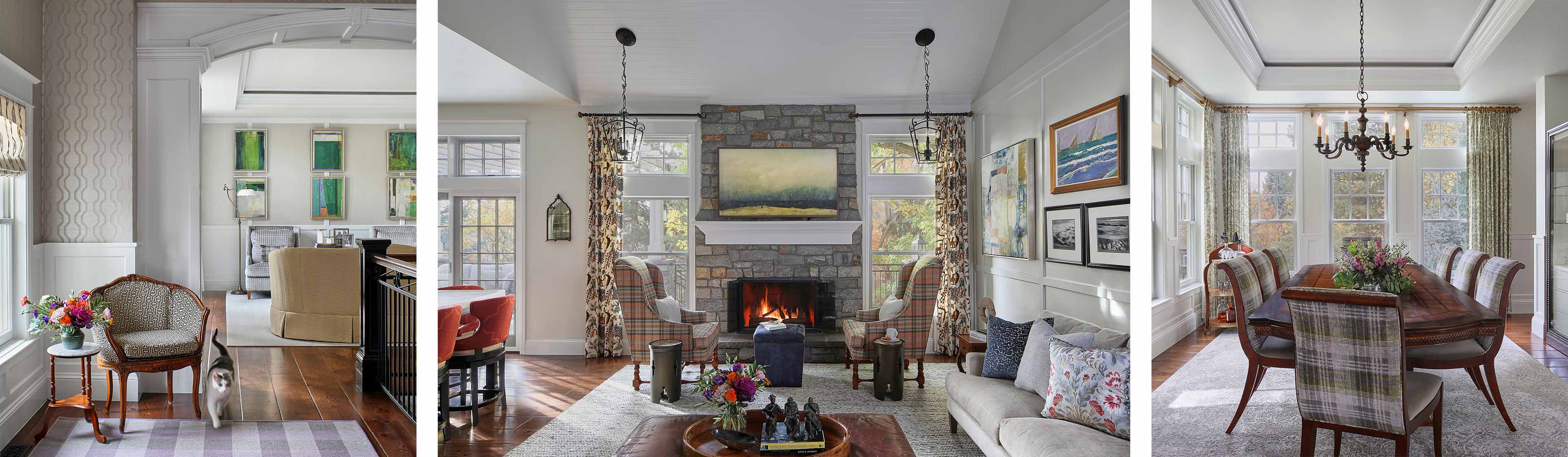
Home Addition vs New Construction: What You Need to Know
When comparing home addition vs new construction, many homeowners focus only on cost. While cost matters, it should not be the only factor.
A home addition allows you to:
- Keep parts of your existing home
- Stay connected to the character of the property
- Make targeted improvements
New construction allows you to:
- Design every space from the ground up
- Improve layout, light, and flow
- Build with modern systems and materials
The main difference is flexibility. A home addition works within limits. New construction removes those limits.
When It Makes Sense to Expand Your Home
The decision to expand or rebuild your home often begins with one simple question: is your current house still a strong foundation for the life you want to live?
For many homeowners, the answer is yes. The home may not work perfectly right now, but it still has real value. The structure may be sound. The lot may be exceptional. The location may be too important to leave. In these cases, expanding can be a smart and thoughtful way to improve how the home functions without giving up everything that already works.
Expanding your home is usually the better option when the problems are specific and solvable. You may need more space, better flow, or updated living areas, but the home itself still has good bones. Rather than starting over, you improve what is already there and build on it with purpose.
Your Home Has a Strong Structure
A strong structure is one of the clearest signs that expansion may make sense. If the foundation is stable, the framing is in good condition, and the house is generally well built, you may have a strong base to work from.
This matters because a home addition depends on the existing house being able to support new work. If the original structure is solid, it is often easier to add square footage, open up certain rooms, or rework parts of the floor plan without creating major complications.
A strong structure may include:
- A stable foundation with no major settling issues
- Framing that is in good condition
- Roof lines or ceiling heights that allow for thoughtful additions
- Exterior walls that can be modified without excessive reconstruction
This does not mean the home has to be perfect. Almost every older home needs some level of updating. What matters is whether the existing house gives you something worth building on.
How do we know if our structure is strong enough for an addition?
The answer starts with an evaluation by the right team. A builder, architect, or structural engineer can assess the foundation, framing, roof system, and load-bearing walls. They can tell you whether the house can support an addition or major reconfiguration. This step is important because a home may look fine on the surface while hiding structural issues behind walls, under floors, or in crawl spaces.
If the structure is sound, expansion becomes a much more practical option. If it is not, rebuilding may end up being safer, smarter, and more cost-effective.
You Value Your Location
Sometimes the strongest reason to expand is not the house at all. It is the land, the street, the view, the neighborhood, or the sense of place.
If you love where you live, expansion gives you the chance to improve the house without giving up the location. This can be especially valuable in established neighborhoods where lots are limited, mature landscaping adds character, and the community itself is part of the home’s value.
You may want to stay because:
- The property has a rare view or lot orientation
- The neighborhood is well established and hard to replace
- You are close to family, schools, work, or community ties
- The lot has outdoor features you want to preserve
- You have already invested emotionally and financially in the property
For many homeowners, location is the one thing that cannot truly be recreated. You can redesign a kitchen. You can add a primary suite. You can improve the layout. But you cannot always find another lot with the same setting, privacy, trees, or history.
This is one of the biggest reasons people decide to expand or rebuild home rather than move somewhere else. If the property itself still fits your life, improving the house can make much more sense than leaving.
Can location alone justify a major addition?
In many cases, yes. If the home sits on a highly desirable lot and the structure can support expansion, investing in the current property can be a better long-term decision than buying another home and trying to renovate that one instead. The key is making sure the house can be improved in a way that truly supports how you want to live.
You Want to Preserve Character
Not every home should be erased just because it no longer works perfectly. Some homes have qualities worth protecting. This may be architectural character, craftsmanship, scale, materials, or simply the emotional value of a house that has been part of your life for years.
Expanding can be the right choice when the goal is not to replace the home’s identity, but to strengthen it. A well-designed addition should feel intentional. It should honor what is meaningful about the original home while solving the practical issues that no longer work.
Character may come from:
- Original millwork or stonework
- Window placement or ceiling details
- Historic proportions
- A sense of warmth or familiarity
- Long family history tied to the house
This is especially important for homeowners who feel connected to the home beyond its square footage. In those cases, the decision to expand or rebuild a home becomes more than a construction question. It becomes a question of what should be carried forward and what should change.
Can an addition preserve the original feel of the house?
Yes, but only if it is designed carefully. Poor additions can feel disconnected, oversized, or forced. Good additions study the existing house and build from its strengths. They improve function without making the original structure feel secondary or confused.
A thoughtful expansion can preserve the emotional and architectural value of the home while making it far more livable.
Your Goals Are Focused
Expansion often works best when your goals are clear and specific. If you do not need to reinvent the entire house, but rather solve a few major problems, adding on can be the smarter path.
For example, you may want to:
- Add a bedroom or guest suite
- Enlarge a kitchen
- Create a larger family room
- Add a home office
- Improve flow between key living spaces
- Build a first-floor primary suite for long-term living
In these situations, expansion allows you to target the areas that need improvement without taking on the cost and scope of a full rebuild.
This is where many homeowners begin to understand the true difference between solving a problem and replacing an entire house. If the core of the home still works, a focused addition may be enough to transform daily life.
Are our problems isolated or are they everywhere?
If the answer is that only certain parts of the house feel too small, outdated, or disconnected, expansion may be a strong solution. If every room feels compromised, then rebuilding may deserve more serious consideration.
When Rebuilding Is the Better Option
There are times when trying to improve an existing home only goes so far. At first, an addition may seem like the simpler choice. You may think adding square footage, changing a few rooms, or updating finishes will solve the problem. But in some homes, the deeper issues are not cosmetic. They are structural, functional, and long-term.
This is where the decision to expand or rebuild your home becomes more serious.
Rebuilding is often the better option when the existing home cannot support the way you want to live, not just today, but years from now. While a rebuild is a larger commitment, it can create a stronger outcome when the current structure is working against you. In many cases, rebuilding gives you more value, more design freedom, and fewer compromises over time.
Below is a closer look at when rebuilding makes more sense than expanding, and why it can be the more thoughtful choice.
The Structure Limits Your Options
One of the clearest signs that rebuilding may be the better path is when the structure itself limits what is possible.
Older homes often have design conditions that are difficult to correct through renovation alone.
These may include:
- Low ceiling heights
- Small and closed-off rooms
- Uneven floor levels
- Outdated framing methods
- Rooflines that limit second-story expansion
- Load-bearing walls in places that block better layouts
At first, these issues may not seem like deal breakers. But once you begin planning changes, they can affect nearly every decision. For example, you may want a larger kitchen that opens to the living space, but a load-bearing wall may sit exactly where that connection needs to happen. You may want taller windows and more natural light, but low ceiling heights and roof structure may prevent that. You may want to add a second story, but the existing foundation may not be able to support the weight.
In these cases, the home is not just outdated. It is resisting the changes you want to make.
That is often the point where it makes more sense to expand or rebuild home by seriously considering a rebuild. If too much of the project depends on forcing the old structure to do something it was never designed to do, the renovation becomes more complicated, more expensive, and less satisfying.
A rebuild removes those limits. It gives you the chance to design the home around your goals instead of working around existing problems.
Systems Need Full Replacement
Another strong reason to rebuild is when the major systems in the home all need to be replaced.
A home runs on more than layout and finishes. Behind the walls, there are systems that affect safety, comfort, and performance every day.
These include:
- Plumbing
- Electrical
- Heating and cooling
- Insulation
- Ventilation
- Roofing
- Windows and doors
If one of these systems needs work, that may still fit within a renovation. But if several of them are outdated or failing at the same time, the project begins to look much more like a rebuild.
For example, an older home may still have:
- Undersized electrical service that cannot support modern appliances
- Aging plumbing with leaks or low water pressure
- Poor insulation that causes heat loss and uneven temperatures
- HVAC systems that are inefficient or no longer sized properly
- Old windows that reduce comfort and energy performance
When all of these systems need replacement, you are no longer making a few upgrades. You are rebuilding much of the home from the inside out.
This raises an important question: if you are already opening walls, replacing infrastructure, and making major investments, does it still make sense to keep the original structure?
Sometimes the answer is yes. But often, starting over creates a better result.
A rebuild allows every system to be designed together.
That means:
- Better energy efficiency
- More reliable comfort
- Cleaner integration of lighting and technology
- Fewer patchwork solutions
- Better performance over the long term
This is especially important for homeowners who want a home that feels refined and performs well every day. True livability depends on systems working together, not just on how beautiful the finished rooms look.
The Layout Does Not Work
In many homes, the biggest problem is not square footage. It is how the square footage is arranged.
A home can be large and still feel frustrating. It can have enough rooms and still not function well. This usually points to a layout issue.
Modern living often requires a home to do more than it did in the past.
People now want spaces that support:
- Gathering and privacy
- Work and rest
- Storage and simplicity
- Daily routines and entertaining
- Aging in place and long-term flexibility
Many older homes were not designed with these needs in mind.
They may have:
- Formal rooms that go unused
- Tight passageways
- Poor kitchen placement
- Weak connection to outdoor spaces
- Not enough storage
- No room for a home office, wellness space, or guest suite
If the basic layout of the home does not match the way you live, adding onto it may only solve part of the problem.
For example, you may add a new family room, but the kitchen still feels disconnected. You may expand the primary suite, but the rest of the home still has poor flow. You may add square footage, but the house still feels awkward because the original structure continues to shape the experience.
This is one of the most important reasons rebuilding can be the better option. A rebuild allows you to rethink the home as a whole.
You can create:
- Clearer circulation
- Better natural light
- Stronger indoor-outdoor flow
- More intentional zoning between public and private spaces
- Better sightlines
- More useful storage
- Rooms that reflect the way you actually live
Instead of correcting one problem at a time, you are creating a home with overall coherence.
You Want Full Design Control
Some homeowners reach a point where they do not want partial improvement. They want a home that feels fully aligned with their lifestyle, taste, and future plans.
That level of alignment is difficult to achieve in a renovation, especially when the original structure places limits on space, proportion, and flow.
Rebuilding gives you full design control from the beginning.
That means you can make decisions with intention about:
- The home’s orientation on the lot
- Window placement and natural light
- Ceiling heights
- Room proportions
- Storage planning
- Indoor-outdoor relationships
- Material consistency
- Long-term accessibility
- Technology integration
- Privacy and entertaining zones
This matters because a well-designed home is not just a collection of attractive rooms. It is a system. Each part supports the next. The architecture, layout, lighting, finishes, and function all work together.
When you rebuild, you are not simply replacing an old house. You are creating a more complete response to how you want to live.
This is especially important for homeowners who care about craftsmanship, clarity, and long-term value. If you know you want a home that feels deeply tailored rather than partly improved, rebuilding may be the better decision.
Home Addition vs New Construction: Understanding Costs
When comparing home addition vs new construction, cost is often misunderstood.
Costs of Expanding
Expansion can include:
- Demolition of existing areas
- Matching old materials
- Working around structural limits
- Unexpected issues inside walls
These factors can increase costs.
Costs of New Construction
New construction includes:
- Full design and planning
- Site preparation
- New systems throughout the home
While the upfront cost may be higher, the process is often more predictable.
In many cases, large renovations can cost 60 to 80 percent of a new build. Sometimes they cost even more. This is why it is important to fully evaluate your options before deciding to expand or rebuild a home.
Timeline Differences to Consider
Time is another key factor in this decision.
Expansion Timelines
Expanding a home can take longer than expected because:
- Hidden issues may be discovered during construction
- Work must fit within the existing structure
- Changes can affect multiple systems
New Construction Timelines
New builds tend to follow a clearer path:
- Design is completed before construction begins
- The process moves step by step
- There are fewer surprises once building starts
Both options require patience, but rebuilding often offers more consistency.
How Your Lifestyle Should Guide the Decision
The decision to expand or rebuild your home should always reflect how you live.
Think about:
- How you move through your home each day
- Where things feel crowded or inefficient
- What spaces you use the most
- What spaces you are missing
For example:
- If you entertain often, you may need better flow between indoor and outdoor areas
- If you work from home, you may need a quiet and functional office
- If your family is growing or changing, you may need more flexible spaces
Expansion can improve certain areas. Rebuilding allows you to rethink everything.
Emotional Factors to Consider
This decision is not only practical. It is also personal.
Many homeowners feel attached to their homes because of:
- Memories
- Time spent with family
- A sense of familiarity
At the same time, holding onto the past can sometimes limit what your home could become.
A balanced approach to expand or rebuild home considers both:
- What is worth keeping
- What needs to change
The Importance of a Clear Process
At The Duet Group, we guide clients through a structured process before making any decisions.
This includes:
- Reviewing the current home in detail
- Understanding your long-term goals
- Aligning budget with scope
- Exploring both expansion and rebuild options
This process helps remove uncertainty and leads to better outcomes.
Home Addition vs New Construction: A Simple Breakdown
Expansion May Be Right If:
- The structure is strong
- You love your location
- Your goals are focused
- You want to keep certain features
New Construction May Be Right If:
- The home has major limitations
- Systems need full replacement
- You want full design control
- You are planning for long-term performance
This is the core of the home addition vs new construction decision.
Thinking About Long-Term Value
When deciding to expand or rebuild a home, it is important to think beyond the immediate project.
Consider:
- How the home will function over time
- Maintenance needs
- Energy efficiency
- Future lifestyle changes
New construction often offers stronger long-term performance. Expansion can still provide value when done carefully and thoughtfully.
Questions to Help You Decide
- What is not working in your current home?
- Can those issues be fixed within the existing structure?
- How long do you plan to stay in the home?
- Are you planning for future needs or just current ones?
- Does your property support expansion or rebuilding?
- How much disruption are you willing to manage?
These questions can help guide your decision.
A Practical Example
Imagine a homeowner with an older home that has:
- A small kitchen
- Limited natural light
- Outdated systems
They could expand the kitchen and improve some areas. However, if the layout still limits light and flow, the improvements may feel incomplete.
Rebuilding would allow them to:
- Redesign the layout
- Improve natural light
- Upgrade all systems at once
In this case, rebuilding may provide better long-term results.
Why an Integrated Approach Matters
A design-build approach brings design and construction together from the start.
This helps:
- Align budget early
- Reduce surprises
- Improve communication
- Create a more cohesive final result
This is especially helpful when deciding to expand or rebuild a home because both options can be evaluated clearly.
Making the Right Choice for Your Home
The decision to expand or rebuild your home is about alignment.
It is about making sure your home supports your life now and in the future.
When comparing home addition vs new construction, there is no one-size-fits-all answer. The right choice depends on your home, your goals, and your priorities.
With the right process, this decision becomes clearer and more manageable.
If you are considering whether to expand or rebuild your home, we invite you to take the next step. Connect with our team to explore your options and move forward with clarity and confidence.