A clear luxury home renovation timeline is not about moving fast. It is about making the right decisions at the right time. When a renovation is planned with care, each step builds on the last. The result is a home that feels complete, functions well, and holds its value over time.
Luxury renovations are different from standard remodels. They involve more planning, more coordination, and more attention to detail. Every decision matters. That is why the timeline is longer and more structured.
In this guide, we break down the luxury home renovation timeline, explain what causes delays, and show how a well-managed process leads to better long-term results.
What Makes a Luxury Home Renovation Timeline Different
A luxury home renovation timeline is longer because it is more detailed.
These projects often include:
- Custom layouts and structural changes
- High-end materials with longer lead times
- Detailed design plans and drawings
- Close coordination between designers, builders, and vendors
A standard home renovation timeline may move faster, but it often skips steps. That can lead to problems later. Luxury renovations take more time upfront so the construction phase runs more smoothly.
Phase 1: Discovery and Planning
Every successful renovation starts here. Before drawings are created or materials are chosen, the project needs a strong foundation. That foundation is discovery and planning.
This phase shapes the entire luxury home renovation timeline because it helps everyone understand what the home needs to do, what the renovation should accomplish, and what level of investment the project will require. It is where ideas become direction.
At this stage, the team looks at the home as it exists today and compares it to how the homeowner wants to live in the future. That sounds simple, but it usually involves much more than choosing what to update. It means asking better questions.
For example:
- Does the current layout support daily routines
- Are entertaining spaces large enough
- Does the home feel connected and easy to move through
- Are there privacy issues between shared and private spaces
- Are storage areas working well
- Is the home ready for long-term living
This is also the phase where real priorities are identified. Some homeowners begin with a broad idea, like wanting a better kitchen or a more functional primary suite. Once the planning process begins, they may realize the project also needs improved lighting, better circulation, updated mechanical systems, or structural changes to support the design.
That is why this step matters so much. It reveals the full picture.
What happens during discovery and planning?
This phase often includes:
- Initial conversations about goals and lifestyle
- Walkthroughs of the existing home
- Measurements and site review
- Discussion of design priorities
- Review of the home’s strengths and limitations
- Budget and scope alignment
- Preliminary timeline expectations
In a luxury project, planning is not just about making a wish list. It is about making smart decisions early. A home may look like it needs cosmetic improvements, but once the team studies the structure, flow, and function, they may see opportunities to improve the home in a much deeper way.
For example, a client may think they only need a kitchen renovation. During discovery, it may become clear that the kitchen feels disconnected because the ceiling heights shift awkwardly, the pantry is undersized, the window placement limits storage, and traffic cuts through the room in a way that disrupts how the family uses the space. Solving the problem well may require more than new finishes. It may require layout changes, lighting changes, structural work, and better relationship between rooms.
This is exactly why discovery protects the rest of the luxury home renovation timeline.
Why does this phase take time?
This phase can take several weeks or even a few months because the team is not just gathering ideas. They are building clarity.
Homeowners often ask, “Why can’t we move right into design or construction?”
The answer is that rushed planning creates problems later.
If the scope is not clearly defined early, the project may run into:
- Confusion during design
- Incomplete pricing
- More revisions
- Delays in approvals
- Expensive changes during construction
A fast start can feel productive, but if the project is not fully understood, that speed often disappears later. In many cases, it creates a slower and more stressful process overall.
What questions should homeowners ask during this phase?
Readers often want to know what they should be thinking about before a renovation begins.
Helpful questions include:
- How do we want this home to function differently than it does now?
- Which spaces frustrate us most in daily life?
- Are we renovating for today, or for the next 10 to 20 years?
- What level of finish and customization do we expect?
- Are we open to structural changes if they improve the outcome?
- What budget range feels realistic for the results we want?
These questions help shape a renovation that is not only beautiful, but useful and lasting.
What can go wrong if this phase is rushed?
When discovery is skipped or compressed too quickly, projects often run into avoidable problems:
- The design may need major revisions
- Contractors may price an incomplete scope
- Materials may be selected before the layout is finalized
- The homeowner may feel unsure once construction begins
- The project may grow beyond the original budget
In other words, a rushed beginning usually creates a more difficult middle.
A thoughtful start does the opposite. It gives the project structure, protects the homeowner’s investment, and creates a stronger luxury home renovation timeline from the very beginning.
Phase 2: Design and Drawings
Once the goals are clear, the project moves into design. This is one of the most important phases in the entire luxury home renovation timeline because it turns ideas into a real, buildable plan.
This phase is where the home begins to take shape on paper before anything is touched on site. It includes both creative and technical work. The design must feel right, function well, and be detailed enough to guide the builder, trades, and vendors clearly.
In a luxury renovation, design goes far beyond choosing attractive finishes. It is about creating a home that works beautifully at every level.
What is included in the design phase?
This phase often includes:
- Floor plans and layout changes
- Room-by-room space planning
- Material and finish selections
- Lighting plans
- Electrical plans
- Cabinetry design
- Built-ins and millwork details
- Plumbing fixture selections
- Architectural drawings
- Engineering coordination when needed
Each of these pieces affects the others. That is one reason the design phase takes time.
For example:
- Moving a wall may change the lighting plan
- Changing a window may affect cabinetry placement
- Selecting a heavier stone slab may require structural review
- Reworking a bathroom layout may affect plumbing lines and scheduling
A luxury renovation needs these decisions to work together, not compete with one another.
Why is design such a large part of the luxury home renovation timeline?
Industry research often shows that design and planning can take 20 to 30 percent of the total project timeline. In a high-end renovation, that number makes sense.
The more custom the project is, the more time is needed to refine details.
This phase is doing several important jobs at once:
- Solving layout problems
- Defining the visual direction
- Coordinating technical requirements
- Reducing guesswork during construction
- Supporting more accurate pricing
- Preventing expensive changes later
This is not wasted time. It is one of the most valuable parts of the process.
What makes luxury design different?
Luxury design is not just about better materials. It is about better thinking.
For example:
- Lighting is planned for mood, comfort, and functionality
- Storage is designed around the homeowner’s actual routines
- Finishes are selected for long-term wear, not just first impression
- Built-ins are tailored to the architecture of the home
- Flow between spaces is considered carefully
A standard renovation may focus mainly on appearance. A luxury renovation must connect appearance, function, and longevity.
This is also where emotional intelligence matters. The best design solutions often come from understanding how a homeowner wants to feel in the space, not just how they want it to look.
Common questions homeowners often have during design:
How many layout revisions are normal?
Several rounds of refinement are common, especially in a complex renovation. The goal is to get the plan right before construction begins.
Why do we need detailed drawings?
Detailed drawings reduce confusion, support accurate pricing, and help trades execute the work correctly.
Can we choose materials later?
Some selections can happen later, but many should be made early to keep the luxury home renovation timeline on track and prevent schedule gaps.
Why does lighting planning matter so much?
Lighting affects how the home looks, feels, and functions every day. Poor lighting can make even a beautiful renovation feel unfinished.
What happens if design decisions are delayed?
Delayed decisions often create delays in other parts of the process. If the builder does not know which fixtures are being used, rough-in work may be incomplete. If cabinetry is not finalized, measurements and production may be delayed. If materials are undecided, orders cannot be placed.
This is why design is such a major driver of the overall home renovation timeline. It is not only about creativity. It is about creating enough clarity for the next phase to move forward with confidence.
Phase 3: Pre-Construction and Approvals
Once the design is complete, the project enters pre-construction. This phase is less visible to homeowners, but it has a major impact on the success of the luxury home renovation timeline.
This is where the project shifts from design intent to construction readiness.
What happens during pre-construction?
This phase often includes:
- Permit preparation and submission
- Final budgeting
- Contractor coordination
- Project scheduling
- Material ordering
- Trade planning
- Construction sequencing
At this point, the team is taking the approved design and preparing every part of the project for execution.
Why does permitting take so long?
Permits are a common source of questions and frustration because the timing can vary widely. Some approvals move quickly.
Others take weeks or months depending on:
- The city or county
- The age of the home
- The type of renovation
- Structural changes
- Zoning issues
- Historic district requirements
- Department backlogs
Homeowners often ask, “Can’t we start while permits are pending?”
In most cases, major work cannot legally begin until the required permits are approved. Even when small parts of the project can move forward, the core timeline usually depends on those approvals.
Because of that, permitting plays a major role in the luxury home renovation timeline.
Why is final budgeting done here?
Pre-construction is where pricing becomes more precise. Earlier budget conversations are often based on estimated scope. Once drawings, selections, and details are finalized, the budget can be reviewed in a much more accurate way.
This matters because luxury renovations often involve custom pieces and specialty materials. Without clear pricing, the project can drift.
This phase helps answer important questions:
- Does the final design align with the investment level
- Are there areas where value engineering is needed
- Are there long-lead items that should be prioritized
- Does the schedule need to reflect procurement realities
Why is material ordering so important?
Luxury projects often depend on custom or specialty items that take time to source and produce.
Examples of common lead times include:
- Custom cabinetry: 3 to 5 months
- Specialty stone: timing depends on sourcing, fabrication, and shipping
- High-end appliances: several months
- Custom windows and doors: often several months
- Decorative lighting: can vary based on vendor and finish
If these items are ordered too late, the construction team may be ready for installation before the products arrive. That creates downtime, resequencing, and frustration.
Ordering early helps protect the luxury home renovation timeline because it aligns the project schedule with real-world availability.
Common questions homeowners have at this stage:
Why can’t we just order everything at once?
Some items can be ordered early, but others depend on final measurements, approvals, or site conditions.
What is a long-lead item?
It is any material or product that takes a long time to manufacture, ship, or prepare.
Can the project stay on schedule if one item is delayed?
Sometimes yes, but sometimes a delayed item affects multiple parts of the build. That depends on where it fits in the sequence.
What is sequencing?
Sequencing means planning the order in which work happens so that each trade can do its job at the right time.
This stage may not feel as exciting as design, but it is one of the biggest factors in whether the home renovation timeline stays organized or becomes reactive.
Phase 4: Construction
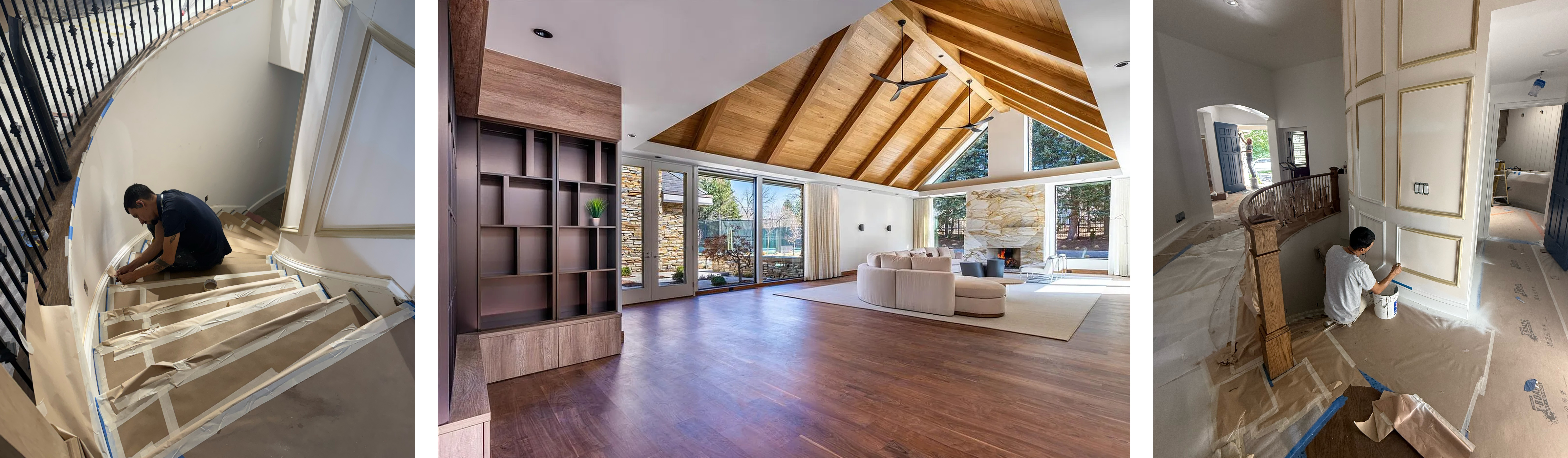
Construction is where the vision becomes physical. It is also the phase most people picture first when they think about renovation. Walls may come down. Rooms change shape. Systems are updated. Finishes begin to appear.
In many luxury projects, construction lasts 6 to 12 months. Larger renovations can take longer depending on scope, complexity, and customization.
What happens during construction?
This phase often includes:
- Demolition
- Framing and structural work
- Plumbing, electrical, and HVAC updates
- Insulation and drywall
- Flooring installation
- Cabinetry and millwork
- Tile and stone installation
- Painting and finishing
- Fixture installation
Every step must happen in a specific order. That is why construction schedules are carefully managed.
For example:
- Framing must happen before drywall
- Plumbing and electrical rough-in must be completed before walls are closed
- Cabinet measurements may depend on wall conditions being finalized
- Flooring may need to wait until moisture levels are correct
This sequence is one reason the luxury home renovation timeline cannot simply be rushed without consequences.
Why does luxury construction take longer?
Luxury construction involves higher levels of detail and more exacting standards.
That often means:
- More precise installation
- More coordination between trades
- More custom work
- More site reviews and inspections
- More care with finishes and materials
For example, a hand-finished plaster wall, custom inset cabinetry, or bookmatched stone installation cannot be approached the same way as standard construction work. These elements require skill, time, and patience.
Homeowners sometimes ask, “If we are paying more, shouldn’t it move faster?”
Not necessarily. In luxury construction, the investment often goes toward better planning, stronger materials, skilled craftsmanship, and tighter execution, not simply speed.
What causes delays during construction?
Many people assume construction is the main cause of renovation delays. Sometimes it is, but often the real cause started earlier.
Common reasons construction slows down include:
- Late design changes
- Delayed material deliveries
- Hidden site conditions
- Permit or inspection timing
- Trade scheduling conflicts
- Expanded project scope
One important point for readers is this: construction often reveals what planning missed. If the earlier phases were rushed, those issues tend to appear here.
What are hidden site conditions?
These are problems that are not visible until demolition begins.
Examples include:
- Water damage inside walls
- Outdated wiring
- Improper framing
- Plumbing issues
- Structural weakness
- Unlevel floors or ceilings
When these issues are found, the team has to stop, evaluate the problem, and decide how to move forward. This can add time, but it is necessary to protect the integrity of the home.
Common questions homeowners ask during construction:
Will we be able to live in the home during construction?
Sometimes, but it depends on the scale of work. In large luxury renovations, living elsewhere is often more practical.
How often should we expect updates?
A well-managed project should include regular communication so homeowners understand progress, decisions, and upcoming milestones.
Do inspections slow the job down?
Inspections can add time, but they are an important part of making sure work is completed correctly and safely.
What happens if we want to add something during construction?
It can usually be evaluated, but changes may affect the budget and the luxury home renovation timeline.
Construction is where planning is tested. A well-planned project usually moves with more confidence, fewer surprises, and better results.
Phase 5: Final Installation and Completion
This phase is often called the last stretch, but it is not a small one. In many ways, it is where the full value of the renovation becomes visible.
The final phase focuses on making the home feel finished, not just built.
What happens during final installation?
This stage often includes:
- Installing fixtures and finish hardware
- Completing paint and touch-ups
- Installing decorative lighting
- Placing furniture and rugs
- Hanging window treatments
- Styling shelves and surfaces
- Completing punch list items
- Final walkthroughs
This is where the home begins to feel cohesive. Every decision from the earlier phases comes together.
Why does this phase matter so much?
A home can be technically complete but still feel unfinished if the final details are rushed.
For example:
- Slight hardware misalignment can stand out
- Missing touch-ups can weaken the overall impression
- Furniture that has not been properly planned can throw off scale and balance
- Incomplete styling can make finished rooms feel flat
In luxury renovation, completion is about refinement. It is about making sure the home performs visually and functionally as a whole.
What is a punch list?
A punch list is a final list of small items that need adjustment before the project is fully complete.
Examples include:
- Paint corrections
- Minor trim repairs
- Hardware adjustments
- Fixture alignment
- Final cleaning issues
These are normal on most projects. The goal is not to avoid them completely. The goal is to address them carefully before the project closes out.
Common questions about this phase:
Why is the project not done if construction is finished?
Because completion includes more than major construction. It also includes the finishing details that shape the final experience of the home.
How long does final installation take?
That depends on the size of the project, the number of furnishings being installed, and how much final detailing is needed.
Can the project feel delayed at the very end?
Yes, and that can be frustrating. But in many cases, the last part of the luxury home renovation timeline is what separates a home that feels merely new from one that feels fully resolved.
Why should this phase not be rushed?
When final installation is rushed, small issues can affect the entire impression of the project. The craftsmanship may be excellent, but if the finishing work is not given proper attention, the home may not feel complete.
This phase matters because it supports:
- Cohesion
- Comfort
- Function
- Visual clarity
- Overall satisfaction
In other words, it is where the home becomes truly livable.
What Causes Delays in a Luxury Home Renovation Timeline
Delays are not always random. They usually come from a few common issues.
Late Decisions
When decisions are made during construction, the timeline expands.
Examples include:
- Changing materials after ordering
- Adjusting layouts mid-build
- Adding new features late in the process
Each change affects multiple parts of the project.
Material Lead Times
Luxury materials often take longer to produce and ship.
Delays can come from:
- Custom fabrication
- Shipping delays
- Limited availability
Planning ahead is key.
Permits and Regulations
Local rules can slow down the process.
Delays may happen due to:
- Review times
- Required changes
- Inspection scheduling
These factors are often outside the team’s control.
Site Conditions
Unexpected issues can appear once construction begins.
Examples include:
- Structural damage
- Outdated systems
- Hidden problems behind walls
These require extra work and can extend the luxury home renovation timeline.
Trade Coordination
Luxury projects involve many skilled trades.
Delays can happen when:
- Work is not properly scheduled
- One delay impacts other trades
- Communication breaks down
Strong project management helps reduce these risks.
Expanding the Scope
As the project develops, homeowners may want to add more features.
While this can improve the final result, it often adds time.
How a Structured Process Keeps the Timeline on Track
A clear and organized process is the best way to protect a luxury home renovation timeline.
This includes:
- Finalizing design decisions early
- Ordering materials ahead of time
- Setting clear milestones
- Keeping communication consistent
A structured approach reflects a commitment to process, clarity, and long-term value, which is central to how thoughtful design-build teams operate.
Why the Timeline Impacts Long-Term Results
The timeline affects more than just how long the project takes. It affects how the home performs over time.
A well-managed luxury home renovation timeline leads to:
- Better craftsmanship
- Fewer mistakes
- Stronger material performance
- A more cohesive design
Rushed projects often result in:
- Poor detailing
- Ongoing repairs
- A home that does not fully match the vision
For homeowners focused on long-term value, the timeline is an investment.
Luxury vs Standard Home Renovation Timeline
A home renovation timeline can vary depending on the level of detail.
Here is a simple comparison:
- Standard projects move faster but may involve more changes later
- Luxury projects take longer upfront but reduce issues during construction
- Standard projects often use ready-made materials
- Luxury projects rely on custom elements and detailed planning
The difference comes down to priorities.
Common Questions About the Luxury Home Renovation Timeline
How long does a luxury home renovation take?
Most projects take 12 to 24 months depending on size and complexity
Can the timeline be shortened?
Some steps can move faster, but rushing often increases cost or reduces quality
What causes the most delays?
Late decisions and material lead times are the most common issues
When should materials be ordered?
As early as possible, often during the design phase
Why does design take so long?
It helps prevent problems and ensures the home works as planned
What happens if issues are found during construction?
The team adjusts the plan and addresses the issue before moving forward
How do you stay on schedule?
Through planning, clear communication, and strong project management
Luxury Home Renovation Timeline
A luxury home renovation timeline is more than a schedule. It is a structured process that guides the entire project.
When each phase is handled with care, the result is a home that feels complete, performs well, and lasts over time.
If you are planning a renovation and want a clear, well-managed approach, we invite you to learn more about how our design-build process supports every stage of the luxury home renovation timeline. Contact us to start the conversation.