Every few years, a new aesthetic takes hold. A finish becomes the finish. A material becomes unavoidable. A palette migrates from the pages of shelter publications into every new build and renovation on the market, until it has traveled so far from its origins that it no longer signals taste so much as timing.
We have watched this cycle repeat for two decades. And our position on it has not changed.
The homes we design at Duet are not built around what is compelling in 2026. They are built around the people who will live in them, the way those people’s lives actually unfold, and the materials and decisions that will hold up across the decades rather than document the year. That is not a reaction to trends. It is a philosophy that predates them, and one that produces something trends cannot: a home that gets better with time rather than more dated.
What Timeless Interior Design Principles Actually Mean
The phrase gets used loosely. Plenty of designers describe their work as timeless. What they often mean is neutral, which is not the same thing. A beige room with clean lines and no strong opinions is not timeless. It is simply risk-averse, and risk-aversion has its own kind of expiration date.
Timeless interior design principles, in the way we think about them, are not about avoiding commitment. They are about committing to the right things. Scale. Proportion. The quality of natural light at a given hour in a given room. The specific gravity of a material that was chosen because it will age into something richer rather than degrade into something tired. These decisions are not safe. They require genuine knowledge of how spaces perform over time, and genuine confidence to make them.
The Difference Between Restrained and Cautious
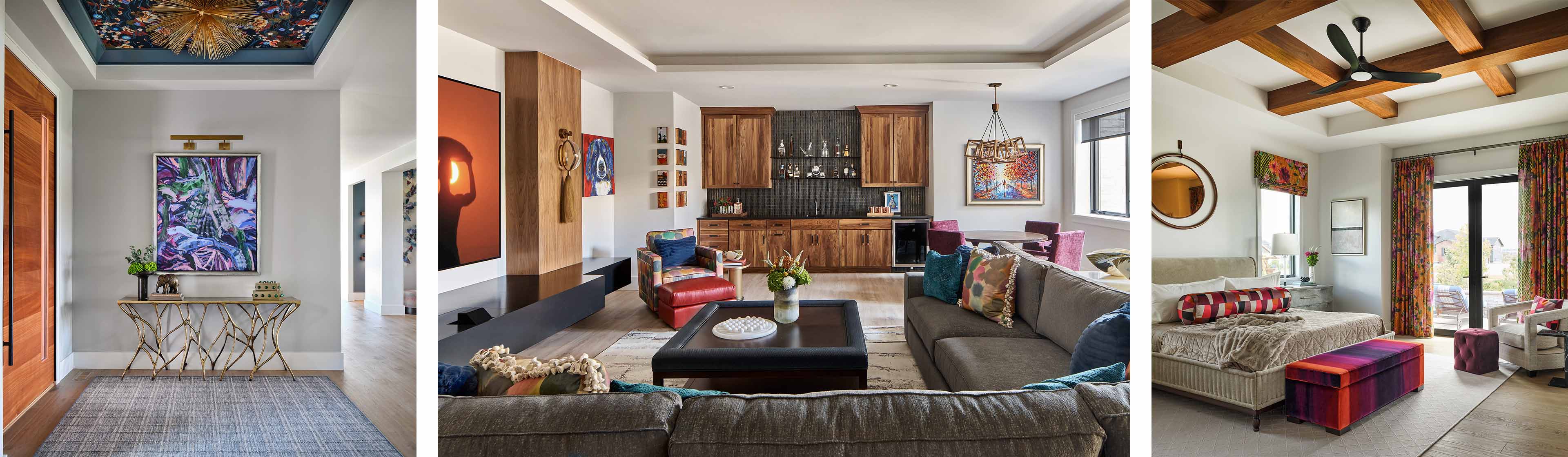
Restraint, as a design principle, is active. It is the decision to remove everything that does not earn its place, and to be deliberate about what remains. A room designed with restraint is not a room that plays it safe. It is a room in which every element was weighed, questioned, and either justified or removed.
Cautious design, by contrast, hedges. It selects finishes because they will not offend anyone, furniture because it will not raise questions, colors because they photograph well in every light. The result is a home that nobody dislikes and nobody particularly feels in their bones, a home that functions as a backdrop without ever becoming a place.
The homes we design are meant to be places. The distinction matters most for clients who are building for the long term, for a home that will host decades of family life, that will accumulate the lived-in quality that only time and genuine use can produce.
Designing a Home That Lasts: Why the Decision Framework Changes
Most interior design conversations start with style: what the client likes, what they have seen, what they want the home to feel like. We start there too. But for clients building something meant to last, designing a home that lasts requires a second layer of questions that most design conversations never reach.
Not just: does this feel right today. But: will this still feel right in fifteen years, and will the material still be performing the way it should, and will this room have gained something from being lived in rather than lost it.
Those are different questions, and they produce different answers.
Materials That Improve With Use
Industry conversation around luxury interiors has shifted notably in this direction. As Architectural Digest has noted, tactile materials that gain character through use have become increasingly central to how designers and clients are thinking about quality, a reflection of a broader move toward permanence over novelty. Stone, solid wood, aged brass, handwoven textiles: these materials develop character over time. They register the life of the household. A marble counter that has absorbed twenty years of family dinners tells a story that a synthetic surface cannot replicate, regardless of how convincingly it was manufactured to look the part.
For clients whose homes will host grandchildren, extended family, the ongoing life of a household that spans generations, this quality is not decorative. It is structural to the purpose the home is meant to serve. Our post on interior design fundamentals explores how these material and structural decisions connect to the broader design principles that underpin every Duet engagement.
Scale and Proportion Over Surface
One of the more common errors in trend-driven design is the substitution of surface for structure. A statement tile, an unusual finish, a color story borrowed from a publication: these things can make a room feel current for a season. What they cannot do is make a room feel right the way that correct proportion and thoughtful scale do, quietly and without needing to announce themselves.
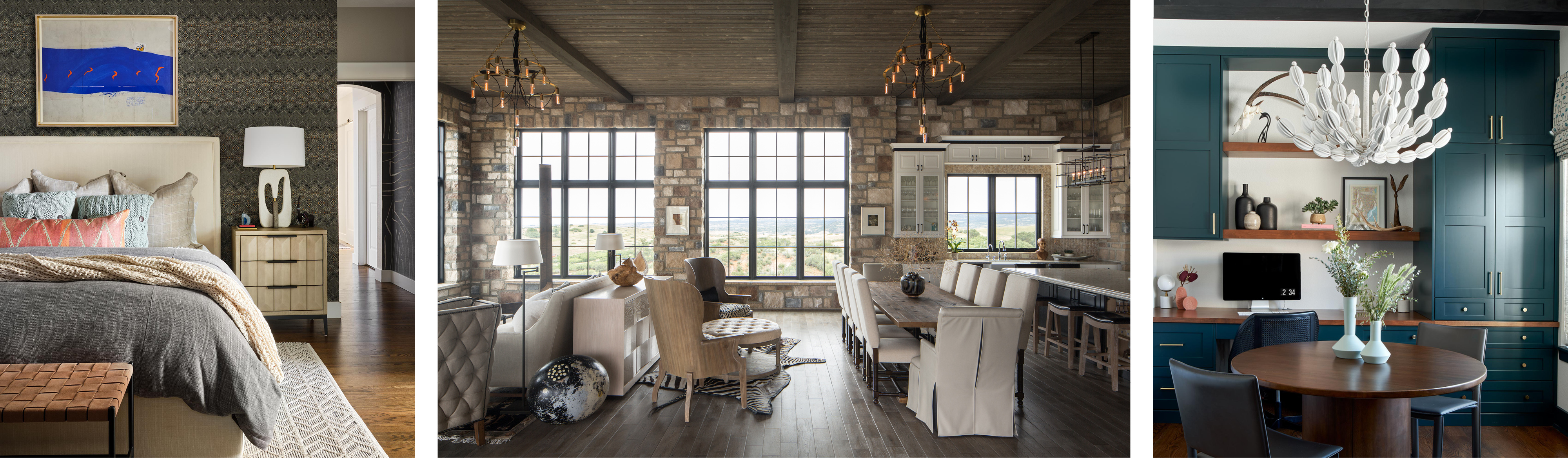
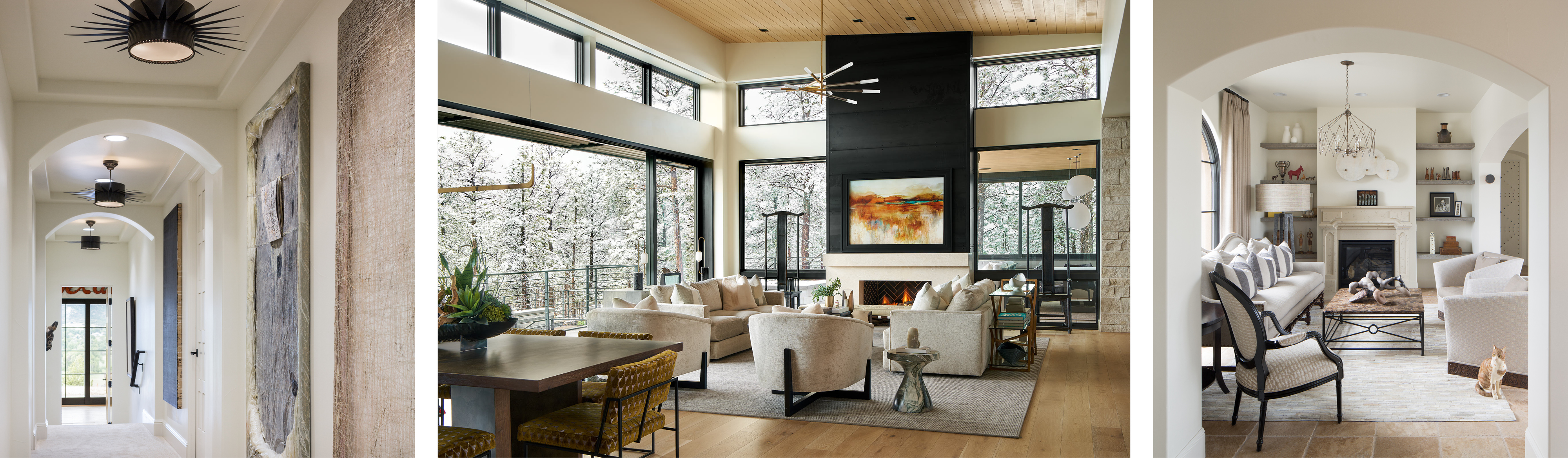
At Duet, the bones of a room are established before anything decorative is considered. The ceiling height in relation to the floor area. The window placement in relation to how light moves through the space across the day. The relationship between rooms and how they communicate with one another. These decisions are invisible once a home is finished, which is precisely why they matter so much. When proportion is right, a room simply feels right. When it is not, no amount of beautiful surface work will fully compensate.
Why Trend-Driven Design Fails the Long-Term Client
The shelter industry has a structural incentive to produce desire for new things. Publications need fresh content. Manufacturers need new product cycles. Designers who build their reputation on a signature aesthetic need that aesthetic to stay recognizable and compelling. All of this produces a constant forward pressure toward the new, which is genuinely useful for some clients in some contexts.
It is not useful for a client building what may be their final home, or a home meant to hold a family across decades. For that client, the most important question is not what is compelling in the market this year. It is what will still be compelling when the market has moved on several times.
The Problem With Signature Styles
One of the reasons we resist having a “Duet style” is that a signature aesthetic is, by definition, a trend with a narrower distribution. A firm that produces a recognizable look is producing something legible to the market at a particular moment. That legibility is an asset when the moment aligns, and a liability when it does not.
Our clients are not asking us to make their home look like a Duet home. They are asking us to make their home look like them. That requires setting aside everything we might otherwise reach for on instinct and designing from the inside out, from the specific life this family lives, the specific rooms they use, the specific ways this home needs to perform. Our post on personalized interior design explores this principle in more depth, including how the discovery process surfaces the details that make a design genuinely specific rather than generically high-end.
What Restraint Looks Like in Practice
It is worth being concrete about this, because restraint as an abstract principle is easy to affirm and hard to execute.
In practice, restraint means that we routinely recommend against things clients have arrived wanting. Not because those things are wrong in some objective sense, but because they are wrong for this room, this home, this family. A homeowner who has fallen in love with a tile they saw in a publication may not realize that the tile reads beautifully in a Mediterranean context and will fight every surface in a Colorado mountain home. Part of our job is to catch those conflicts early, before they become expensive regrets.
Restraint also means that we edit. Not just in the selection phase, but throughout the design process. A room that was working at the concept stage can accumulate decisions across the execution phase that begin to compete with each other. One strong gesture per room is a principle we return to consistently. When a beautifully chosen piece has to compete with several others for the same attention, none of them land the way they should. The restraint is what makes the single right decision register.
What Gets Left Out
Some of the most important decisions we make are subtractive. The accessory that was beautiful but broke the palette. The finish that was on trend but would date the room. The piece of art that was meaningful to the client but wrong for the wall. These decisions are harder to explain than additive ones, because a client cannot see what was not chosen. But they shape the outcome as much as anything that made it into the room.
For clients at the stage of life where this home is meant to be the last significant design effort, the editing matters enormously. There is no next project to fix what this one gets wrong. The decisions carry more weight, and the discipline required to make them correctly is part of what we bring to the engagement. Our post on timeless interior design goes further into how we think about the specific decisions that determine whether a home ages well or simply ages.
How This Philosophy Connects to the Duet Process
The approach we have described here is not a separate philosophy from how we run a project. It is built into every phase of how Duet Design operates.
It shapes the discovery process, where we spend considerable time understanding not just what a client wants now, but what their home will need to do across the next twenty or thirty years. Multigenerational usability. Aging-in-place considerations that are designed in from the start rather than retrofitted later. Spaces that will serve different functions as the household evolves without requiring a renovation every decade.
It shapes the material selection process, where we consistently steer clients toward quality over novelty, toward finishes that reward patience, and toward the investment pieces that a room should be built around rather than the decorative layers that follow.
And it shapes the editing process, which is ongoing throughout a project. Leading design studios working at this level describe the same conviction: as one luxury firm observed, the most compelling interiors in 2026 favor emotional gravity and a clear point of view over novelty, and that design rooted in craftsmanship and restraint does not follow trends so much as quietly outlast them. This is the standard we hold ourselves to on every project, and it is the standard our clients have come to expect.
For projects that also involve construction or architectural planning, this same philosophy carries through Duet Build and Duet Forma. The structural decisions, the material quality built into the bones of a home, the site-driven design thinking that ensures a house feels rooted in its place: all of it reflects the same conviction that the most enduring homes are the ones designed with the long game in mind from the very first conversation.
The Homes That Hold Up
We have had the experience, more than once, of walking through a home we designed a decade ago and finding that the things we were most deliberate about have only gotten better. The stone floor that has absorbed years of foot traffic. The custom millwork that has remained visually quiet while the room around it has evolved. The palette that has grown richer as the furnishings have settled into it.
And we have had the experience, equally instructive, of seeing trend-driven rooms from the same period that now carry their vintage as a burden rather than a quality.
The difference was not budget. Both kinds of rooms involved significant investment. The difference was the framework behind the decisions: whether the question was what looks compelling right now, or what will still be right when right now is ten years ago.
That is the question we bring to every engagement. It is what our clients are hiring us to ask. And it is why the homes we are most proud of are not the ones that generated the most attention at the time, but the ones that still feel exactly right to the people living in them, years after the rest of the market has moved on.
If you are planning a home that is meant to hold up across decades and serve the full arc of your family’s life, we would welcome the conversation. Learn more about Duet Design’s residential interior design services or explore how our approach to furniture and fixtures reflects these same principles at the sourcing level. When you are ready to talk through your project, reach out to our team.