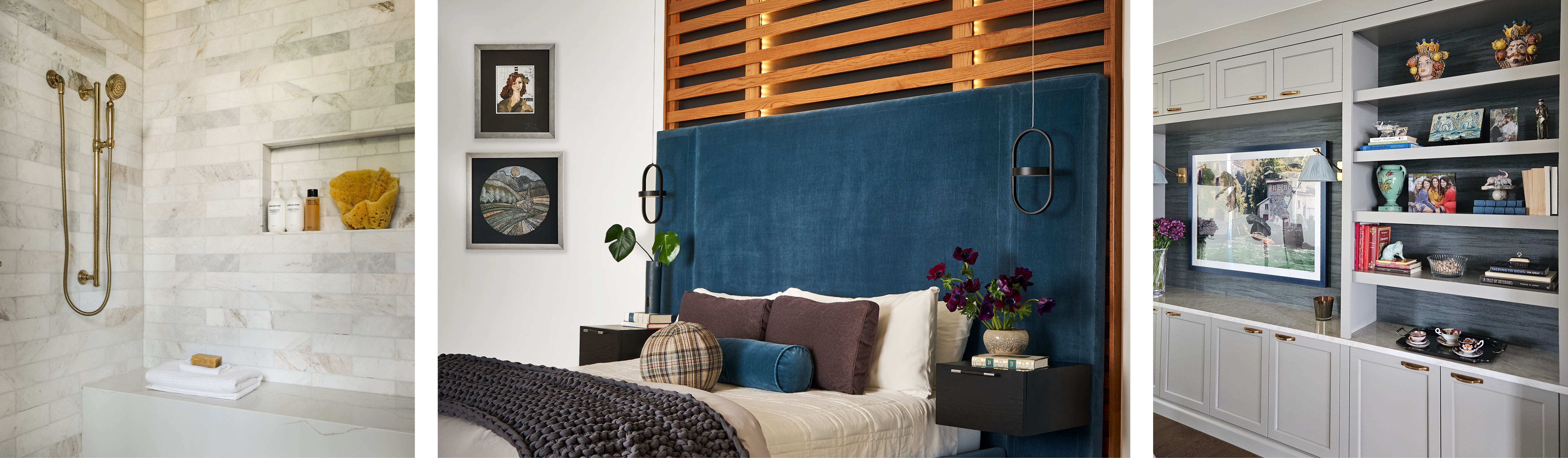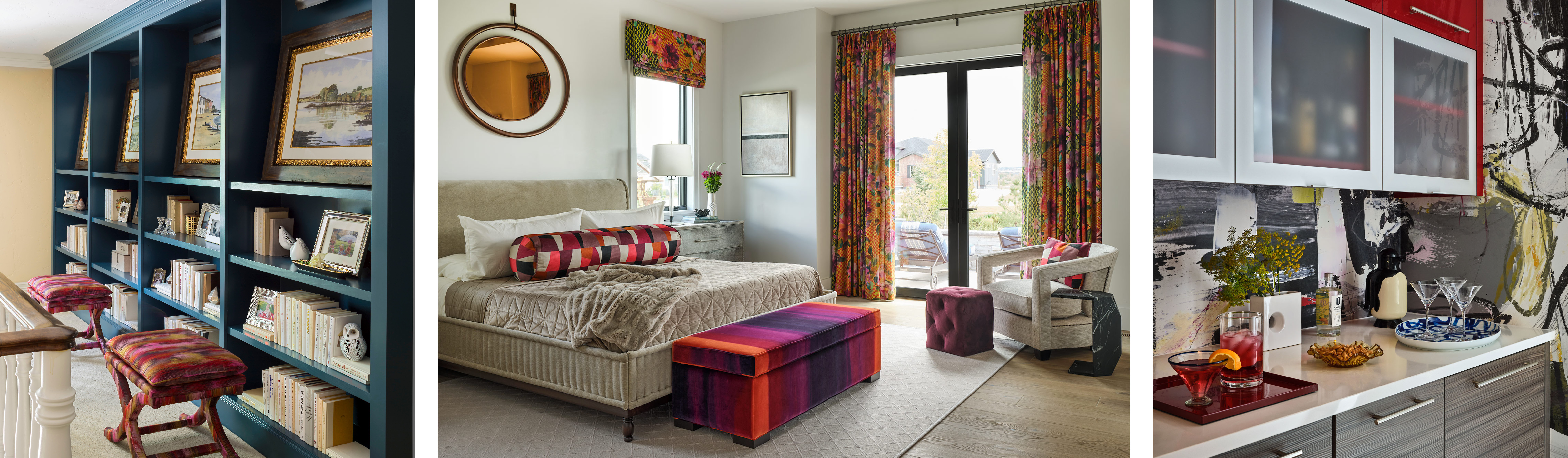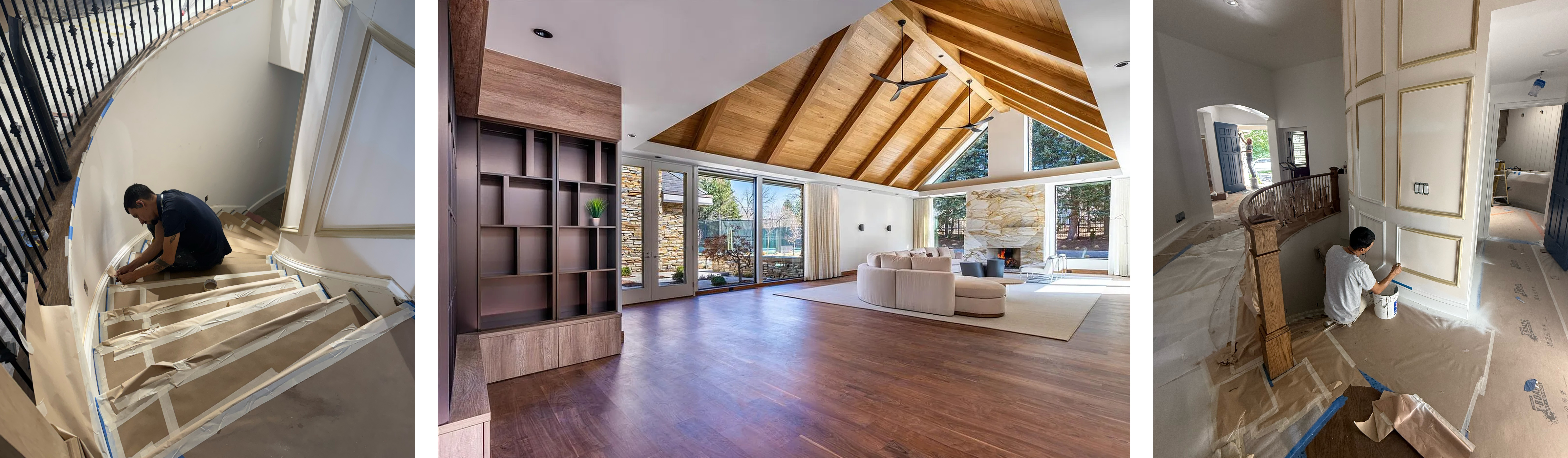
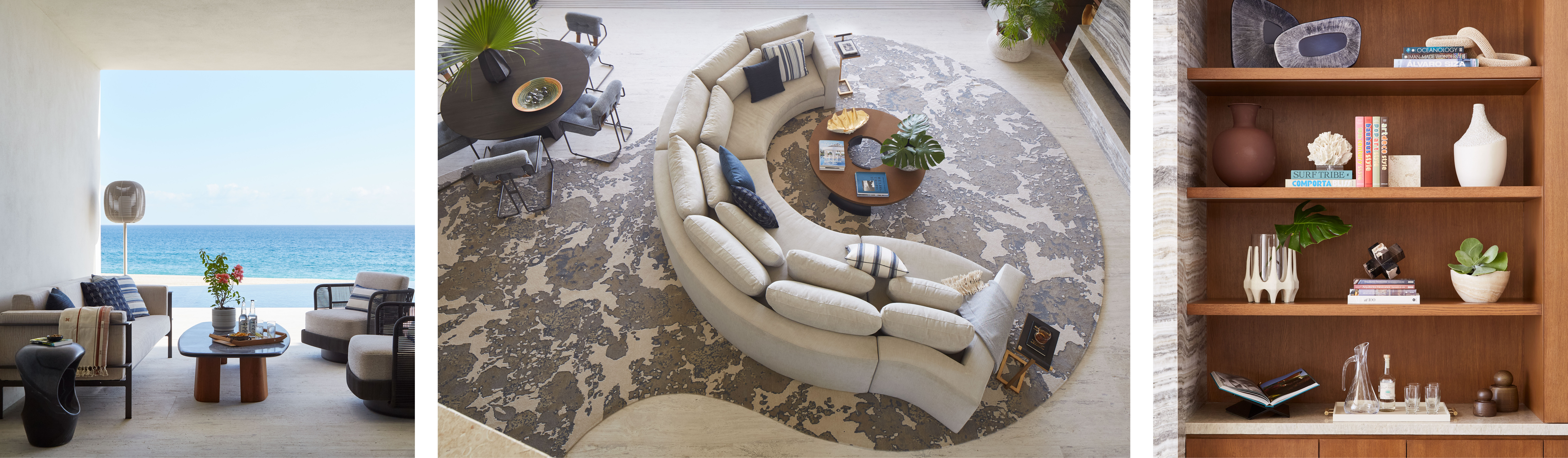
People ask me this more than almost anything else, usually with real curiosity: how do you know when a room is finished. It sounds like it should have a tidy answer, a checklist I run before I call a space complete. It does not work that way. Knowing when a room is done is a judgment, built over years, and most of it happens before I ever add the last object.
How Interior Designers Know When a Room Is Finished
When someone asks how interior designers know when a room is finished, what they are usually asking is how to stop. They have a space that is close, and they cannot tell whether one more piece will complete it or tip it over. That instinct to keep adding is the most common way a good room goes wrong. The discipline is not in knowing what to add. It is in knowing when to stop reaching for the next thing.
A room is finished when nothing in it is asking for attention it has not earned, and nothing that should lead is being drowned out. That balance is quiet. You feel it before you can explain it.
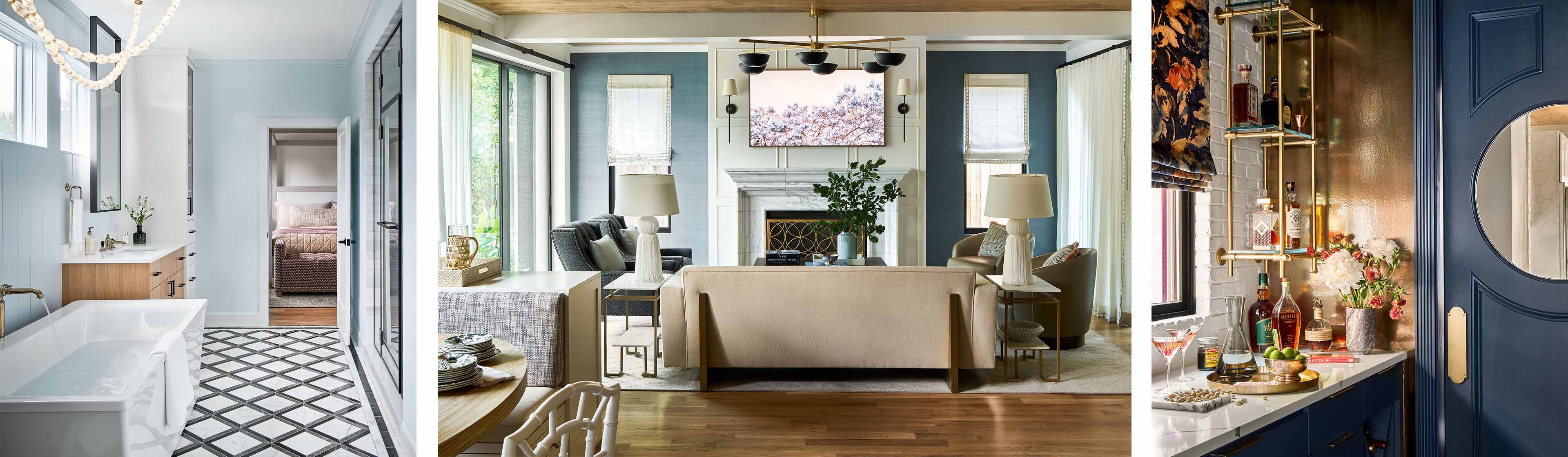
What I Am Actually Looking At
When I walk a room near the end, I am reading a few specific things, and none of them is whether there is enough in here.
- Hierarchy. Every room needs something that leads, something the eye goes to first. If I cannot find it in three seconds, the room has not resolved, no matter how full it is.
- Breathing room. Surfaces need space that is intentionally left open. A console with one considered object reads; a console with six competing ones disappears.
- Light through the day. A room can look right at noon and wrong at dusk. I do not trust a space until I have seen how it holds up as the light changes.
- The exits. How a room hands off to the hall or the next space tells me whether it belongs to the home or was decorated on its own.
When those four settle, the room is usually done, even if a client’s instinct is that something is still missing. Often what feels missing is just the unfamiliar calm of a space that has stopped straining.
The Subtraction Most People Skip
More rooms are finished by removing than by adding. A space that has been lived in and layered over time tends to accumulate, and accumulation is not composition. When I take three things off a shelf, the two that remain finally get to be seen. Clients are frequently surprised that the move which completed the room was a subtraction. It rarely occurs to them, because the culture around decorating is about acquisition, and the harder skill is restraint.
Scale Is the Thing Most People Miss
If I had to name the single element that separates a finished room from an almost-finished one, it would be scale. A rug one size too small, a light fixture that is timid for the room, art hung a few inches too high: individually minor, collectively the reason a room never quite resolves. Scale is unforgiving because it is subtle. You feel that a room is not working long before you can see that the proportions are the cause. A great deal of what I do is correct scale that a client sensed was wrong but could not locate.
How the Read Changes From Room to Room
Finished does not mean the same thing in every room, and part of the judgment is knowing what each space is actually for. A room’s purpose sets the bar for when it is done.
A Room for Gathering
A living room or family room is finished when it can hold people comfortably and still look composed when it is empty. That is a harder balance than it sounds. A room styled only for the empty state falls apart the moment a family uses it; a room built only for use often looks unresolved when no one is in it. Done, here, means it works both full and empty.
A Room for Rest
A bedroom is finished when it feels calm before it feels decorated. The test is whether the room lowers your shoulders when you walk in. If the eye is still busy, still cataloguing things, the room is working against its own purpose, no matter how attractive each individual piece is. In a room meant for rest, restraint is not a style choice. It is the function.
A Room for Focus
A study or office is finished when nothing in it competes with concentration. The composition still matters, but it serves attention rather than distraction. I finish these rooms by removing more than I might elsewhere, because a focused room and a busy one are close cousins, and the difference between them is discipline.
Why Interior Design Process Completion Is Not a Finish Line
Interior design process completion, in the way I think about it, is less a finish line than a resting point. A room is done for now, done for this phase of the household’s life, done until something real changes. That is not a hedge. It is how a home actually works.
A room I finished for a couple with young children is not finished forever. It is right for the life in the house today. When the children are older, or the way they use the room shifts, the room will want a real adjustment, not because I got it wrong, but because the room was honest about the moment it was made for. The best homes are not frozen. They are resolved, and then re-resolved, as the life inside them moves.
The Mistakes People Make Finishing a Room Themselves
Most people who feel stuck on a room are making one of a few predictable moves, and naming them helps.
- Buying to solve a feeling. The room feels off, so the instinct is to add something. Nine times out of ten the room is asking to lose something, not gain it.
- Hanging art to fill a wall rather than to compose one. Art placed to cover space rarely lands. Art placed for scale, height, and what surrounds it almost always does.
- Matching everything. A room where every element agrees with every other element has no hierarchy, and a room with no hierarchy gives the eye nowhere to rest.
- Chasing a reference image. A room borrowed whole from somewhere else fights the actual architecture, light, and life it now has to live in. Inspiration is a starting point, not a blueprint.
None of these come from bad taste. They come from working without the one thing a trained eye provides, which is the ability to see the room as it is rather than as you have grown used to it.
The Difference Between Done and Safe
There is a version of finished that is really just safe. Everything matches, nothing risks anything, and the room is perfectly pleasant and completely forgettable. I do not consider that done. A finished room usually has one decision in it that took some nerve: a scale that is bolder than expected, a color that holds the whole scheme together, a single piece allowed to be the clear protagonist.
Knowing when a room is done includes knowing whether it has that spine. A room without one is not unfinished in the sense of needing more. It is unfinished in the sense of not yet having said anything. Those are different problems, and only one of them is solved by adding.
Whether You Can Develop This Eye Yourself
Clients sometimes ask whether they can learn to see a room the way I do. To a point, yes. The habit that helps most is learning to look at what a room is doing rather than what is in it. Stand in the doorway and notice where your eye goes first, then second. Notice what is competing. Notice the surface that is too busy and the corner that has been ignored for a year. That practice alone resolves more rooms than any shopping trip.
What is harder to learn is the confidence to stop. Restraint feels, to most people, like leaving the job unfinished, because the culture around homes rewards addition. Learning that a room is done, and then leaving it alone, is the part that takes years. Nearly two decades of doing this has mostly taught me to trust the first honest read of a room and to distrust the urge to fuss. The American Society of Interior Designers frames strong design around restraint and coherent composition rather than accumulation, which is consistent with what experience keeps confirming: the discipline is in the stopping.
Why the Last Ten Percent Takes the Longest
The bulk of a room comes together relatively quickly. The furniture is placed, the palette is set, the big decisions are made. Then there is a long stretch where the room is eighty or ninety percent there and stubbornly refuses to feel finished, and that stretch is where the real work lives. It is slow because it is precise. A few inches on a piece of art, one object removed, a lamp relocated, a rug swapped for the right size. None of it is dramatic, and all of it is the difference between a room that is nearly right and one that is right.
Clients sometimes lose patience here, because from the outside the room already looks good. I understand the impulse, but this is exactly the point not to rush. The almost-finished room is the most dangerous one, because it is close enough to tempt you into calling it done and living for years with the small wrongness you could have resolved in an afternoon.
Trusting Empty Space
The hardest thing to ask a client to accept is deliberate emptiness. A bare stretch of wall, an open surface, a corner left quiet. People read empty space as unfinished, when it is often the thing making everything around it work. Space is not the absence of design. It is one of the tools, and a room that is afraid of it never quite resolves, because the eye has nowhere to rest between the things worth looking at.
What Clients Get Wrong About Following Trends
A room chased toward whatever is current tends to age badly and, worse, never feels like the person who lives in it. I am not against a current color or a fresh material; I am against letting the season decide a room instead of the person. The rooms I consider genuinely finished are the ones that reflect the household so specifically that they would look wrong in anyone else’s home. That is the opposite of a trend, and it is why those rooms still read as finished years later, long after the reference images that inspired lesser rooms have dated.
What This Means for a Client
If you are living with a room that feels almost right and you cannot name what is off, the answer is rarely one more purchase. More often it is a hierarchy that has not been established, a surface that is too busy to read, or one brave decision the room needs and does not yet have. That is the read I bring to a space, and it is most of what my work actually is.
Our approach to how a room resolves runs through everything from a full home to a single space; you can see more of it in our interior design work. If you have a room that is close but not settled, tell me about it and we will find what it is waiting for.