If you are building a custom home, you have likely searched interior architect vs interior designer and wondered which one you actually need. The terms sound similar. The work overlaps. Yet the difference can shape how your home functions for decades.
For clients investing in a long-term residence, this decision is not cosmetic. It affects structural planning, daily comfort, and long-term value. When roles are unclear, projects slow down. Budgets expand. Spaces lose clarity. When roles are aligned early, the home feels intentional from the inside out.
This guide will walk you through interior architect vs interior designer in practical terms, explain what interior architecture really means, and help you structure the right team for a custom build.
Interior Architect vs Interior Designer: Why This Matters More Than You Think
In high-end residential construction, timing is everything. Most layout and structural decisions are finalized before furnishings are even considered. That means if interior planning happens too late, major opportunities are already gone.
According to the National Association of Home Builders, more than 50 percent of custom home projects experience change orders tied to layout adjustments, mechanical coordination, or interior detailing. Many of these changes stem from incomplete early planning.
When homeowners understand interior architect vs interior designer from the start, they can:
- Prevent costly structural revisions
- Avoid scale mismatches between rooms and furnishings
- Coordinate lighting and ceiling details correctly
- Align millwork with actual use
- Protect construction schedules
This is not about hiring more people. It is about building a team with clarity.
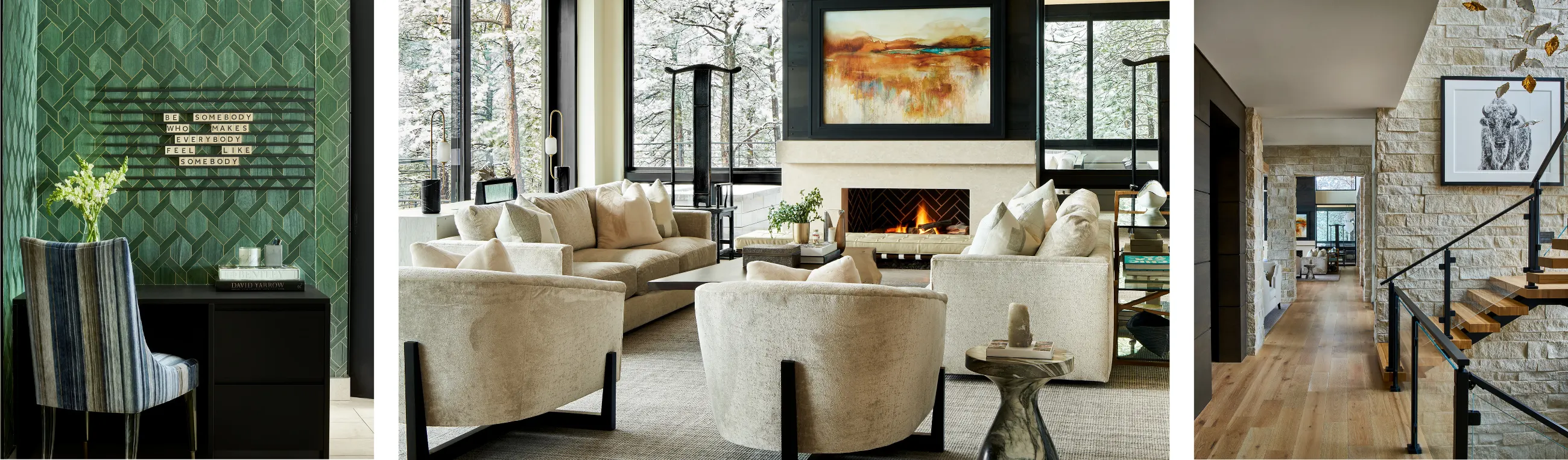
What Is Interior Architecture?
Many homeowners ask directly, what is interior architecture? The simplest answer is that interior architecture is the part of the design process that shapes how the inside of a home is built, not just how it looks. It focuses on the structure, spatial layout, and technical details that make rooms function well day to day. In other words, interior architecture is “designing from the inside out,” with real attention to how people move through a home and how the interior is constructed.
This is where interior architecture differs from interior decorating, and even from many parts of interior design. Interior architecture sits close to the architectural drawing set, because it deals with decisions that affect framing, mechanical systems, and construction sequencing. That is why it tends to matter most in custom homes, large renovations, and projects where the interior layout needs to be reworked.
What is interior architecture responsible for?
When we talk about what is interior architecture, we are talking about the interior framework that supports daily life. It is the difference between a home that looks impressive in photos and a home that feels quietly effortless to live in.
Interior architecture often includes floor plan refinement and room adjacencies. It covers wall placement, wall removal, and how circulation works between zones. It can include stair design and placement, and the way staircases land into a hallway or main living space. It also includes built-in cabinetry and millwork, like mudroom systems, library walls, and integrated kitchen and pantry solutions, because these pieces affect framing, electrical, and lighting.
Ceiling architecture is also part of interior architecture. That includes ceiling heights, soffits, beams, and the way ceiling planes guide the eye through a space. Lighting layout tied to framing is a major component too, because recessed lighting, channels, cove lighting, and fixture placement depend on what is happening behind the drywall. Mechanical coordination lives here as well, especially when you want vents, returns, speakers, sprinklers, and smart home components to feel aligned instead of scattered.
Why interior architecture is a custom home issue, not a “later” issue
Interior architecture is not something you want to tackle after construction is underway. That is when changes are most expensive, and most disruptive. Change orders are common in custom building, and they often come from decisions that were not fully resolved early, like outlet locations, ceiling details, lighting plans, and built-ins. Even when a change seems small, it can create a chain reaction through multiple trades. Some builders estimate change orders can add 5 to 10 percent (or more) to a custom home budget, depending on scope and timing.
Interior architecture helps reduce those “we should have caught this earlier” moments by forcing the right questions at the right time. It also creates better alignment between how the home is drawn and how it will actually be lived in.
Why size changes everything in interior architecture
In larger custom homes, interior architectural planning becomes critical because the stakes are higher and the home has more moving parts. Homes above 6,000 square feet often include multiple gathering areas, private retreats, guest quarters, and specialty spaces (such as wellness rooms, wine storage, or a study that needs real acoustic privacy). Many 6,000 square foot plans also include separate guest suites or in-law suites, which adds another layer of circulation, privacy, and mechanical planning.
To put scale in perspective, the average U.S. home is around 2,500 square feet, so a 5,000+ square foot home is roughly double the size of what most people are used to navigating. When a home is that large, “just add another room” is rarely a clean decision. You have to think about how the whole home flows, where people enter, where they pause, where storage belongs, and how daily routines work without friction.
Without careful interior spatial organization, large homes can feel oversized rather than intentional. Rooms can feel disconnected. Hallways can become dead space. Ceilings can feel randomly tall instead of proportioned. Interior architecture prevents that by giving the home a clear internal logic.
The details people do not realize are interior architecture
Many homeowners believe they are only making “design choices” when they pick finishes. In reality, many of the choices that affect comfort and livability are interior architecture decisions, and they show up long before finishes are selected.
Here are examples that tend to surprise people:
- Sightlines: what you see when you enter the home, and what you see from the kitchen, the main hallway, and the primary suite corridor.
- Storage planning: where brooms, overflow platters, holiday decor, and sports gear actually live, so closets are not an afterthought.
- Noise control: where mechanical rooms sit, how laundry is buffered, and how sound travels between media spaces and bedrooms.
- Lighting structure: the difference between a ceiling that supports layered lighting and one that limits you to a few surface fixtures.
- Kitchen and pantry architecture: clearances, work zones, appliance garage planning, and the physical space required for the way you cook and host.
These are the decisions that create quiet luxury. They are rarely trend-based. They are built into the house itself.
What is interior architecture in real life? A simple way to picture it
If the architect defines the home’s overall form and structure, interior architecture defines how the inside is shaped to support daily life. It answers questions like:
- Where does the day start in this house, and where does it end?
- Where do guests gather, and how do they move without walking through private zones?
- What spaces need to flex over time, and what spaces should stay fixed?
- What needs to feel open, and what needs to feel protected?
This is also where future planning belongs. If aging in place matters to you, interior architecture is the right stage to address it. The American Institute of Architects Home Design Trends Survey tracks features like aging-in-place planning and accessibility, including single-floor living and easier movement within the home. Even if you are not designing for mobility today, planning for it now is far easier than retrofitting later.
A quick “interior architecture” checklist for custom homes
If you want a fast way to tell whether interior architecture should be a priority in your project, look for these signals. If several apply, you are in interior architecture territory.
You are changing the floor plan, not just finishes. You want custom built-ins that feel integrated. You care about ceiling detail and lighting layers. You need strong separation between entertaining zones and quiet zones. You want a guest suite that feels like its own wing. You want storage planned with the same care as the living spaces. You are coordinating complex systems (audio, security, HVAC zoning, smart lighting). You want the home to adapt well over decades.
The takeaway
When you ask what is interior architecture, you are really asking how a home becomes livable at a high level. Interior architecture is the planning and detailing that makes a custom home feel composed, clear, and built to last, not just impressive on move-in day. Done well, it protects your investment, reduces midstream changes, and supports the kind of daily living that feels calm, not complicated.
Why Interior Architecture Shapes Long-Term Performance
Today’s custom homes include far more technical complexity than they did twenty years ago. Smart home systems, advanced HVAC zoning, radiant heating, concealed lighting channels, and integrated storage require structural coordination.
Recent data from Houzz shows:
- 42 percent of custom homeowners request dedicated wellness or fitness areas.
- 39 percent include home offices designed for long-term remote work.
- 31 percent plan multi-generational accommodations.
These requests are not decorative. They require interior architectural planning.
For example:
- A wellness suite may require floor reinforcement for equipment.
- A wine room requires insulation, vapor barriers, and mechanical systems integrated into wall assemblies.
- A primary suite designed for aging-in-place may require wider doorways and reinforced bathroom walls.
- A concealed pantry requires framing adjustments long before cabinetry is ordered.
Without interior architecture, these details are reactive rather than intentional.
The Emotional Impact of Interior Design
While interior architecture shapes structure, interior design shapes atmosphere.
Interior designers focus on:
- Materials and finishes
- Custom furniture scale
- Textile layering
- Decorative lighting
- Window treatments
- Art placement
- Acoustic balance through soft materials
According to industry research, homeowners who involve interior designers during new construction report higher satisfaction with room proportion and furniture integration compared to those who hire designers after construction.
Interior design influences how spaces feel at eye level. It ensures that large rooms do not feel empty and small rooms do not feel crowded. It refines balance and rhythm across a home.
When considering interior architect vs interior designer, understand that one defines spatial logic. The other defines lived experience.
Where Projects Often Go Wrong
One of the most common missteps in luxury construction is separating architecture and interior planning too rigidly.
Here are frequent issues we see in projects without early collaboration:
- Ceiling beams placed without accounting for lighting fixtures.
- Windows positioned without considering furniture layouts.
- Kitchen islands scaled incorrectly for room size.
- Built-in shelving that does not align with art or storage needs.
- Mechanical vents interrupting ceiling symmetry.
They are coordination failures, and they are the kinds of issues a structured design review process is meant to catch early.
Early clarity around interior architect vs interior designer reduces these risks.
What Is Interior Architecture in a Legacy Context?
For legacy-driven clients, what is interior architecture becomes a question of longevity.
Interior architecture considers:
- How a home adapts across decades.
- Whether primary living areas support future mobility.
- How circulation supports large family gatherings.
- How storage protects collections and heirlooms.
- How lighting supports aging eyes without feeling clinical.
A 2024 survey by the American Institute of Architects found that 48 percent of high-end residential clients requested long-term adaptability as a priority feature.
That priority is architectural in nature.
Interior architecture plans for the future. Interior design refines the present.
Budget Clarity and Strategic Planning
Custom homes today often range from $500 to $1,000 per square foot in premium markets. Even small structural adjustments can create ripple effects in labor and material costs.
When layout revisions occur after framing begins, the cost can increase significantly due to demolition, revised engineering, and rescheduling trades.
By contrast, thoughtful planning during early design phases may increase upfront design fees slightly but reduce costly mid-construction revisions.
Understanding interior architect vs interior designer helps allocate budget wisely:
- Structural investments are planned intentionally.
- Millwork aligns with actual furniture needs.
- Lighting systems are integrated, not retrofitted.
- Storage is built into the architecture, not added later.
This protects both financial investment and design integrity.
How to Decide What Your Project Requires
Ask yourself these questions:
- Are we significantly altering floor plans?
- Will we relocate walls or stairs?
- Does the home include specialized spaces?
- Is aging-in-place important?
- Are mechanical systems extensive?
- Are we building above 5,000 square feet?
If yes, interior architecture should be involved early.
Then consider:
- Are we furnishing at a fully custom level?
- Do we want cohesive material selection throughout?
- Is art integration important?
- Are we designing multiple entertaining zones?
If yes, interior design is essential.
The answer to interior architect vs interior designer is often not either-or. It is about how they work together.
Interior Architect vs Interior Designer in an Integrated Firm
At The Duet Group, our integrated model aligns design and build under one structured process, including the coordination advantages described in what is design build. This dual-discipline approach allows interior architecture and interior design to move in coordination rather than in sequence.
Our framework is grounded in process, precision, and trust. That means:
- Spatial planning informs construction drawings early.
- Millwork design aligns with furniture dimensions.
- Lighting coordination happens before framing.
- Budgets are transparent across structural and aesthetic decisions.
For clients building homes intended to last decades, this alignment is critical.
Frequently Asked Questions About Interior Architect vs Interior Designer
What is the main difference in interior architect vs interior designer?
The main difference is structural responsibility. An interior architect handles layout changes and built-in structural elements. An interior designer focuses on finishes, furnishings, and atmosphere.
What is interior architecture in simple terms?
What is interior architecture? It is the planning and design of interior structural components that shape how a home functions, including walls, ceilings, stairs, and integrated systems.
Do luxury custom homes need both?
Many do. Large or complex homes often benefit from interior architectural planning and interior design working together.
When should interior architecture begin?
Interior architecture should begin during schematic design, before framing plans are finalized.
Can interior designers move walls?
Structural modifications typically require architectural and construction coordination. Interior designers focus primarily on finishes and furnishings.
Is interior architecture more expensive?
Interior architecture involves technical coordination and drawings, which may increase design fees. However, early planning can reduce expensive mid-construction revisions.
Interior Architect vs Interior Designer: A Strategic Perspective
Understanding interior architect vs interior designer is not about titles. It is about structure. Interior architecture defines how your home works. Interior design defines how your home feels, and that difference becomes clearer when you understand the interior design process.
When aligned early, these disciplines produce homes that are calm, intentional, and built for long-term living.
If you are planning a custom home or large-scale renovation, we invite you to explore our integrated approach at Duet Design and Duet Build. Contact us to discuss how we structure teams for legacy-driven homes designed with clarity and precision.