The clients who have built before are the toughest audience I have, and they are also the ones most likely to come back. That is not a contradiction. Someone who has been through a custom build already knows where the process usually breaks. When they choose to do it again with us, they are not buying a pitch. They are choosing something specific they did not have the first time, and they can usually name it.
What Luxury Custom Home Builder Repeat Clients Are Actually Choosing
Luxury custom home builder repeat clients tend to have a first build somewhere in their past that taught them what the hard parts really are. Almost never the construction itself. Usually the coordination. The weeks lost while an architect and a builder who had never worked together sorted out a conflict neither saw coming. The change orders that traced back to a detail nobody thought to flag. The feeling of standing in the middle of three firms, translating between them.
When those clients come back, what they are choosing is the absence of that. They already know the building can get done. What they want the second time is for it to get done without them holding the project together by hand.
The Thing They Say Most
The comment I hear most from clients on a second build is some version of: last time I felt like the general contractor of my own life for two years, and I do not want to do that again. That is the real product. Not a finish, not a feature. The experience of a project that is already coordinated, so their job is to make decisions rather than to manage the people making them.
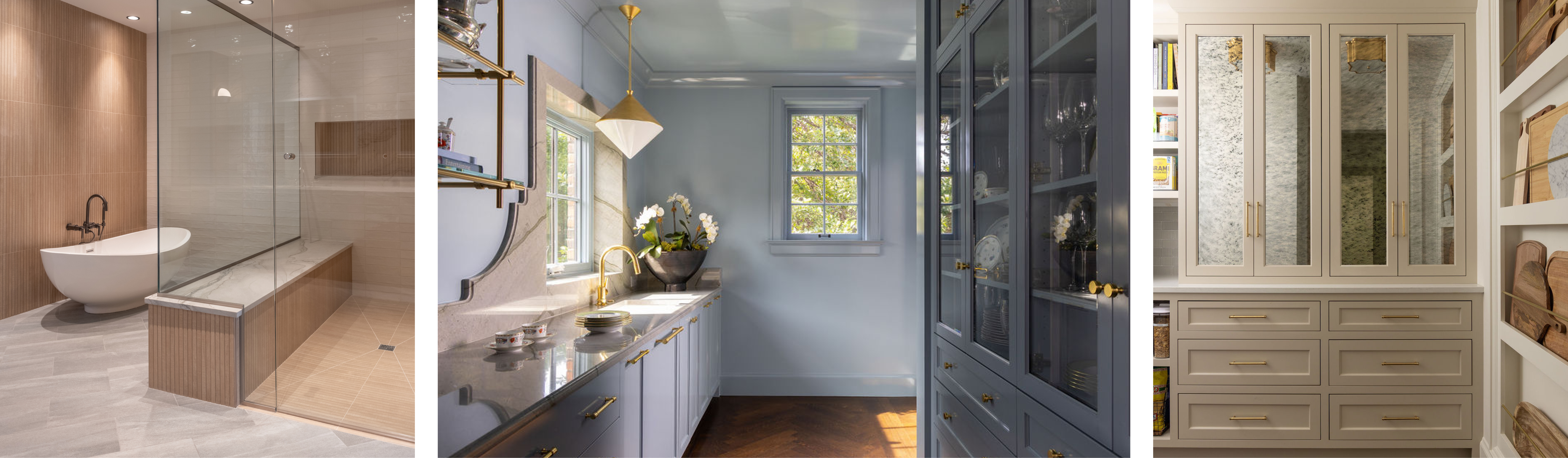
Why Hire a Design Build Firm Instead of Assembling a Team
The honest case for why hire a design build firm comes down to when the hard conversations happen. In a conventional project, the architect designs, the builder prices what was designed, and the conflicts between the two surface after drawings exist, which is the expensive place to find them. When architecture and construction sit under the same roof, those conversations happen at the start, when a conflict is still a discussion instead of a change order.
I lead both our architecture and our construction, so when a design decision carries a construction cost, that shows up in the room immediately, not when someone bids the drawings months later. Clients do not see that coordination happening. They just notice that fewer things come apart late. Our post on the custom home trifecta of designer, architect, and builder gets into why that alignment matters more than most people realize until they have felt its absence.
What Changes on the Second Project
A second build with the same team is not easier because we cut corners.
It is easier because a lot of the foundation is already poured, in every sense.
- We know how the client makes decisions, where they want to go deep and where they would rather trust the team.
- We know their standard, the level of finish and function they consider normal, so we are not calibrating in real time.
- We know how they handle the quiet months, which means we can tell them what is coming in a way that actually lands.
- The relationships between the people on the project already exist, so the coordination cost that eats the first build is much lower on the second.
None of that makes a complex build simple. Complex is complex. But it makes the process feel like a collaboration between people who know each other, rather than a team assembling itself under pressure.
The Clients Building More Than One Home
A good share of the clients who come back are managing more than one property. A primary residence and a mountain home. A main house and a place that started as an investment and became somewhere the family actually wants to be. For them, a second project with the same team is not just easier, it is much of the point.
When we have already built one home for a family, we know their standard, how they live, and what they value enough to spend on. A second property does not need to match the first, and usually should not. It needs to feel like the same family lives there, adapted to a different place and a different way of using it. That kind of continuity across homes is nearly impossible to get from a new team meeting the family for the first time, because so much of it lives in judgment that was earned on the first project.
The Clients Who Come Back Quickly, and the Ones Who Come Back Years Later
Some clients call again before the first project has fully settled, because they already have another property in mind. For them the continuity is nearly seamless. We know their standard and their process, so a second home starts from a real head start instead of a blank page.
Others come back years later, when life has moved and a different home is needed. Those are interesting in their own way. The household is in a new phase, and the home has to catch up. A team that knows the first project can read those changes clearly, because we know what was built for the long term and what was a practical answer to a moment that has since passed.
Trust That Compounds Over Time
The most valuable thing a repeat relationship produces is not efficiency. It is trust, and trust changes how a project runs. On a first build, a client is reasonably watching everything, because they have no track record with us yet. By the second, they know how we handle a problem, how we deliver news they do not want to hear, and whether our word holds. That knowledge lets them do the thing that makes a build go well: hand us the parts they do not need to manage, and spend their attention where it matters.
This is close to how people describe a long relationship with a doctor or an advisor they trust. The professional knows the history, and that history changes the quality of every recommendation that follows. A builder who knows how a family lives, what they care about, and how they decide gives better counsel than one working from a blank page, because the advice is calibrated to the actual people.
What a First-Time Client Can Learn From the Repeat Ones
If you have never built before, the way repeat clients behave is worth paying attention to, because they have already learned the lessons the hard way.
- They protect the early phase. Having felt what happens when the foundation work is rushed, they give it the time it needs.
- They value coordination over heroics. They would rather a project that quietly never hits the crisis than a team that is good at rescuing one.
- They choose the relationship, not just the portfolio. They have learned that how a team operates over two years matters more than any single photograph.
- They build for how they live, not for resale. The clients who come back are almost always the ones who built a home to live in deeply, and found that it held its value precisely because it was made with that intent.
What “Coordinated” Actually Buys You
Coordination sounds abstract until you have felt its absence, so it is worth being concrete about what it buys. It buys a budget conversation that happens once, with everyone in the room, instead of three separate ones that collide at the end. It buys selections made in a sequence that fits the build, rather than driven by whoever asks first. It buys a field problem on an active site getting solved by people who already understand the whole project, instead of a chain of emails between firms who each see only their piece. And it buys the design intent from the first presentation still being legible in the finished home, because nobody along the way quietly traded it away to solve a problem they did not know was connected to it.
Repeat clients know all of this from experience, which is why they rarely ask whether we can coordinate. They already watched what happens when no one does, and they are choosing not to repeat it.
Building for the Long Term, and Sometimes the Next Generation
Many of the clients who come back are building homes meant to last well beyond the current moment, places where a family will gather for decades and, in some cases, that will pass to the next generation. A home built with that horizon in mind is built differently. Materials are chosen for how they age. Spaces are planned around how a household will change over many years, not just how it lives today. Decisions are weighed against permanence rather than the market.
That kind of build rewards a long relationship more than almost any other, because a team that knows the family and the home can carry the original intent forward as the house adapts over time. A first-time team, however capable, is meeting all of it under the pressure of an active project. Continuity is not a luxury on a legacy home. It is close to a requirement.
How I Read a Returning Client
When a past client calls about a new project, I do not treat the relationship as already earned. I treat the first project as the reason they are willing to have the conversation, and the new one as something I still have to be right for. Their circumstances may have changed, the scope may be different, the site may present problems the last one did not. The trust we built is real and it helps, but it does not exempt the new project from the same honest evaluation as any other. If anything, I owe a returning client more candor, not less, because they are extending me the benefit of the doubt, and the fastest way to lose that is to take it for granted.
Why This Points Back to One Team
Everything a repeat client values, less coordination overhead, trust that carries forward, judgment that compounds, is harder to build across three separate firms that reassemble for each project. When architecture, construction, and interiors already share a process and a history with a family, the second project starts from something real. That is the practical argument for keeping the work under one roof, and it is a large part of why so many clients who try the assembled-team approach once do not do it a second time. The Design-Build Institute of America has noted that the quality of the owner and builder relationship is one of the strongest predictors of how a project turns out, and repeat business is that relationship keeping score.
So when a client who has done this before chooses to do it again with us, I do not treat it as a given. I treat it as the clearest sign that the last project delivered on the part that is hardest to see: not just a finished home, but a process they would willingly enter again.
If you have built before and know exactly which parts you do not want to repeat, that is a good place to start a conversation. Take a look at how our construction process works alongside architecture and design, and when you are ready to talk through the next one, get in touch.