Designing a home is a rare opportunity. It is not just about finishes or square footage. It is about shaping the way you live every day. Yet even thoughtful homeowners can fall into the common mistakes when designing a house when they move too quickly or rely on instinct instead of structure. These missteps are rarely about taste. They are usually about timing, planning, and alignment.
According to industry surveys, more than 60 percent of custom home projects experience mid-construction changes. Nearly half go over budget due to design revisions after framing begins. Those numbers reveal something important. The most expensive common mistakes when designing a house usually happen before construction is underway, , often during the early stages of the custom home building process
If you are in the decision phase, clarity is your strongest asset. Let’s walk through the design mistakes that cost the most and how to avoid them with confidence.
Why Common Mistakes When Designing a House Keep Repeating
Most homeowners do not lack vision. They lack a defined process.
You may have saved images for years. You may know what materials you like. But without a plan that connects lifestyle, architecture, and budget, inspiration alone will not protect the outcome. A structured framework like a well-defined interior design process ensures each decision builds on the next rather than competing for attention.
Research from the National Association of Home Builders shows that homeowners rank layout, storage, and natural light as their top priorities. Yet these are often the first elements compromised when projects begin without a structured roadmap.
A home designed with discipline feels calm. A home designed reactively often feels unfinished, even when it is technically complete.
Mistake 1: Starting Without a Clear Process
One of the most common mistakes when designing a house is beginning with finishes instead of fundamentals. When homeowners skip early alignment, they often miss critical steps covered in pre-construction planning, which leads to revisions later.
What This Looks Like
- Choosing tile before finalizing plumbing layout
- Selecting lighting before confirming ceiling heights
- Approving cabinetry without storage analysis
When decisions are made out of sequence, rework becomes likely.
How to Avoid It
Start with a phased design approach:
- Lifestyle mapping: How do you move through your day?
- Functional planning: What rooms must support work, hosting, privacy, and rest?
- Budget allocation by category before selecting materials
- Construction feasibility review before drawings are finalized
A defined process removes guesswork. It also builds trust between homeowner and team. A structured design review process helps prevent this kind of disruption.
Mistake 2: Designing for Appearance Instead of Performance
Beautiful renderings do not guarantee livable spaces. Another of the common mistakes when designing a house is focusing on how a room looks instead of how it performs.
The Hidden Cost of Design Mistakes in Layout
Design mistakes in layout can impact daily life for decades:
- Oversized islands that block movement
- Kitchens without enough concealed storage
- Primary suites placed far from children’s rooms
- Formal spaces that rarely get used
Homes perform best when rooms reflect real routines, not idealized ones.
A Performance-Based Approach
Before confirming layout, ask:
- Where do backpacks land?
- How many guests do we realistically host?
- Is there space for aging in place?
- Will remote work remain part of daily life?
Design that reflects behavior feels refined because it is honest.
Mistake 3: Underestimating Storage and Infrastructure
Storage consistently ranks among the top three homeowner priorities. Yet it is one of the most common mistakes when designing a house to underestimate how much is required.
Storage by the Numbers
Industry data suggests that homes with dedicated mudrooms and built-in storage solutions report higher long-term satisfaction scores. Yet many custom homes allocate less than 8 percent of total square footage to functional storage.
Consider layering storage in these areas:
- Entry transitions
- Kitchen perimeter cabinetry
- Secondary hallways
- Utility rooms
- Garage planning
Infrastructure Is Not Optional
Electrical, plumbing, and HVAC planning are invisible but critical. Inadequate HVAC zoning can create temperature swings between floors. Poor lighting plans lead to glare or shadow.
A thoughtful lighting plan includes:
- Ambient lighting for overall glow
- Task lighting for cooking and reading
- Accent lighting to highlight architecture
- Dimming systems for flexibility
Overlooking these systems is one of the design mistakes that is difficult to correct later.
Mistake 4: Misaligning Budget With Vision
Budget strain is one of the most consistent common mistakes when designing a house, especially in large-scale projects.
Many homeowners underestimate the cost of furnishing expansive spaces. High-end furnishings for an 8,000 square foot home can reach 15 to 20 percent of the overall construction budget.
Break the Budget Into Categories Early
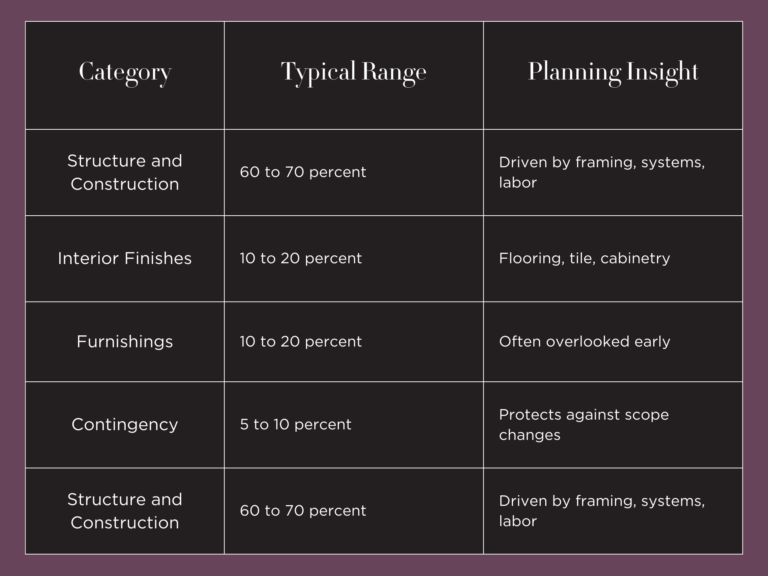
Clarity about allocation reduces stress later. It also prevents rushed substitutions that compromise craftsmanship.
Mistake 5: Ignoring the Future
Homes should evolve with you. Yet failing to plan for change remains one of the common mistakes when designing a house.
Life Stage Planning
For legacy-driven homeowners downsizing, right-sizing requires intention. Every room must justify its purpose.
For scaling families, expansion can feel exciting but overwhelming. Teenagers require privacy. Aging parents may need accessible suites.
Consider planning for:
- Multi-generational visits
- Guest quarters or accessory dwelling units
- Wider doorways for long-term accessibility
- Flexible bonus rooms that adapt over time
Future-focused planning protects investment and legacy.
Mistake 6: Overlooking Orientation and Natural Light
Light shapes mood, productivity, and sleep. Studies show that increased exposure to natural light can improve overall well-being. Yet light planning is often treated as secondary.
Questions to Ask About Orientation
- Where does morning light enter?
- Are living areas positioned for optimal views?
- Do window placements align with furniture layouts?
- Is there protection from harsh afternoon sun?
Failing to study the site is one of the quiet design mistakes that affects daily comfort.
Architecture and interior planning should be developed together. When they are separated, windows and furniture compete instead of align.
Mistake 7: Designing Rooms in Isolation
A home should feel cohesive. Another of the common mistakes when designing a house is treating each room as an isolated decision.
Think in Sequences
Instead of focusing on rooms individually, consider:
- What do you see when you enter?
- How do ceilings shift from public to private spaces?
- Do materials transition smoothly?
Cohesion often comes from repetition:
- Consistent trim profiles
- Aligned door heights
- Coordinated hardware finishes
Subtle alignment creates visual calm.
Mistake 8: Ignoring Acoustics
Open floor plans are popular, yet acoustics are rarely discussed early.
Hard surfaces such as stone and glass reflect sound. Without planning, spaces can feel loud and unsettled.
Layer acoustic solutions such as:
- Insulated interior walls
- Solid-core doors
- Upholstered furnishings
- Zoned mechanical systems
Quiet comfort is part of refined living.
Mistake 9: Rushing Decisions to Meet Construction Deadlines
Lead times for custom windows, cabinetry, and specialty lighting often range from 12 to 20 weeks. When selections are delayed, substitutions become necessary.
Rushed decisions are among the most avoidable common mistakes when designing a house.
Build a Decision Calendar
Outline deadlines for:
- Plumbing fixtures
- Cabinetry drawings
- Tile approvals
- Lighting specifications
Clear timelines reduce pressure and protect quality.
Mistake 10: Separating Design and Construction Too Late
When designer and builder collaborate from the beginning, details align. When they do not, friction increases.
Late coordination can result in:
- Budget overruns
- Redundant work
- Structural changes after approvals
An integrated approach, where interior design and construction planning operate together, provides transparency and accountability.
Structure is not rigidity. It is clarity.
Frequently Asked Questions About Common Mistakes When Designing a House
What are the most common mistakes when designing a house?
The most common mistakes when designing a house include starting without a defined process, misaligning budget and vision, overlooking infrastructure, and separating design from construction planning too late. These issues often lead to change orders and added costs.
Why do design mistakes happen even in luxury homes?
Design mistakes occur when aesthetic decisions are made before functional analysis. Large budgets do not replace structured planning. Without coordination, even high-end homes can feel incomplete.
How can I avoid common mistakes when designing a house?
Begin with lifestyle planning and phased design. Confirm budget categories early. Work with a team that aligns architecture, interior design, and construction from the outset.
Are common mistakes when designing a house expensive to fix?
Yes. Layout revisions, mechanical changes, and finish replacements after framing can significantly increase costs. Early coordination protects both budget and timeline.
When should I hire a designer to prevent design mistakes?
Hire a designer before architectural drawings are finalized. Early involvement strengthens layout decisions and material coordination.
Do common mistakes when designing a house affect long-term value?
Absolutely. Homes with thoughtful layouts, strong infrastructure, and timeless materials retain value longer and require fewer updates.
Avoiding Common Mistakes When Designing a House With Confidence
Avoiding the common mistakes when designing a house is not about perfection. It is about alignment. When process, budget, architecture, and interior planning move together, the result feels grounded and intentional.
A well-designed home supports daily life quietly. It reflects taste without chasing trends. It balances performance and beauty.
At Duet Design, our approach is structured yet creative. We believe clarity builds trust. Homes designed with discipline and collaboration are built to last.
If you are preparing to design or build, explore our full-service interior design and custom construction services. Or contact us to begin the conversation. Thoughtful homes start with informed decisions.