The home office has become one of the most important rooms in the modern home. What was once treated as a temporary workspace or extra room is now expected to support focus, productivity, privacy, and long-term flexibility.
For many homeowners, the office is no longer a secondary space used only occasionally. It is part of daily life. Some people work remotely full time, while others use the office for meetings, financial planning, consulting work, writing, or managing personal responsibilities. Because of this, thoughtful home office design has become essential.
A successful office needs more than a desk and chair. It should support how the homeowner works, thinks, communicates, and moves through the day. Lighting, acoustics, layout, storage, technology, and furniture placement all influence how the room feels over time.
At The Duet Group, office planning is approached with the same level of intention as the rest of the home. The goal is not simply to create a beautiful room. It is to create a space that supports clarity, comfort, and long-term livability.
Why Home Office Design Matters More Than Ever
The shift toward remote and hybrid work has permanently changed how homes function. Even homeowners who split time between home and the office often need a dedicated space for meetings, focused work, reading, or planning.
When an office is not designed thoughtfully, the problems become obvious quickly. Limited privacy, poor lighting, weak storage, background noise, and visible clutter all affect how the room performs. Over time, these frustrations create stress and distraction.
A thoughtful home office design creates the opposite experience. It helps the homeowner feel organized, calm, and supported throughout the day. The office should feel connected to the overall tone of the home while still giving the homeowner a sense of focus and separation when needed.
This balance is what makes long-term office planning so important. The room should support serious work without feeling cold or disconnected from the rest of the house.
Temporary Workspaces vs. Long-Term Office Planning
There is a major difference between a temporary workspace and a permanent office designed for everyday use.
Many temporary workspaces were created quickly out of necessity. A desk may have been placed in a guest room, hallway, or spare bedroom without much thought beyond convenience. While these solutions can work short term, they often reveal limitations over time.
Long-term office planning looks deeper. It considers how the homeowner actually uses the space every day. For example, someone who spends hours on video calls needs different planning than someone who primarily reads or writes. A homeowner who handles confidential conversations may need stronger acoustic separation. A couple sharing an office may require additional storage, flexible seating, or dual workstations.
Good office planning is not about creating the largest room possible. It is about creating a space that feels intentional, comfortable, and easy to use every day.
Why Space Allocation Matters
One of the most overlooked parts of home office design is space allocation. Many homeowners assume a larger office will naturally perform better, but layout and organization often matter more than square footage alone.
A smaller office can feel calm and highly functional when planned properly. A larger office can feel awkward or inefficient if the furniture placement, lighting, and circulation are poorly considered.
The most successful offices are designed around workflow. Instead of filling a room with furniture, the design should support the activities that happen there each day. Some homeowners may need a focused desk area and integrated storage. Others may want room for reading, reviewing plans, or holding small meetings.
The office should feel balanced rather than crowded. Every element should support a purpose.
Choosing the Right Location for the Office
Office placement has a major impact on how well the room functions long term. A beautiful office can still fail if it sits in the wrong part of the house.
An office located near the kitchen or main living area may feel convenient at first, but household movement and noise can quickly become distracting. This is especially true for homeowners who spend several hours each day in meetings or focused work.
A quieter location often supports better concentration and privacy. Upper-level corners, secondary hallways, private wings, or courtyard-facing rooms usually create a calmer environment. The office should feel connected to the home without sitting directly in the center of daily activity.
For some homeowners, detached or semi-detached offices provide even greater flexibility. A separate office can create stronger boundaries between work and home life while also offering long-term adaptability. Over time, these spaces may evolve into guest suites, libraries, wellness rooms, or creative studios.
This kind of planning becomes especially valuable in custom homes where flexibility matters just as much as appearance.
Home Office Layout Design and Daily Workflow
Strong home office layout design is about more than deciding where the desk should go. It is about creating a room that supports focus, movement, privacy, storage, technology, and comfort throughout the day.
A poorly planned office often creates small frustrations. The chair may bump into a cabinet. The window may cause glare on the screen. The printer may be too far from the desk. The video call background may show a busy hallway or cluttered shelf. These issues may seem minor on their own, but together they make the office less comfortable and harder to use.
A thoughtful layout reduces that friction. It allows the room to support the homeowner’s natural workflow instead of forcing the homeowner to adjust around poor planning.
Start With How the Office Will Be Used
The first step is understanding what actually happens in the space. Not every home office needs to function the same way.
Some homeowners use their office for deep focus and quiet work. Others spend much of the day on video calls. Some need space for reading, reviewing plans, writing, managing household finances, or meeting with an advisor or spouse.
Before deciding on the layout, it helps to ask:
- How many hours per day will the office be used?
- Will the space be used for video calls?
- Does the homeowner need privacy for confidential conversations?
- Will two people ever use the office at the same time?
- Should the room also work as a library, sitting room, or guest space?
These answers shape desk placement, storage, lighting, seating, and technology needs. An office used mainly for video meetings needs a strong camera background, controlled lighting, and better acoustic planning. An office used for reading and writing may need softer natural light, a quieter location, and comfortable seating.
The best layout is based on real use, not assumptions.
Desk Placement Should Support Focus and Comfort
The desk is usually the center of the office, but it should not be placed only for appearance. Desk placement affects comfort, privacy, screen visibility, and movement.
If the desk faces a bright window, glare can make screen work uncomfortable. If the homeowner’s back is directly to the door, the room may feel less settled. If the desk blocks circulation, the office can feel crowded even when the room is large.
In many cases, the best desk position gives the homeowner a sense of calm and control. The entry point should be visible without making the desk feel exposed. Natural light should support the work surface without overwhelming the screen. There should also be enough room to move around the chair, access storage, and shift between tasks.
A desk placed perpendicular to a window often works well because it brings in daylight while reducing glare. In larger offices, a floating desk can feel refined and substantial, but only when there is enough space for circulation and cord management. In smaller offices, a built-in desk may be more efficient.
Circulation Affects How the Room Feels
Circulation refers to how people move through the room. In a home office, circulation should feel natural and unobstructed.
A common mistake is adding too much furniture. A desk, office chair, guest chairs, storage cabinets, side tables, and bookshelves may all seem useful, but too many pieces can make the office feel crowded. The homeowner may have to squeeze around furniture, move chairs to open cabinets, or adjust around awkward corners.
Good circulation allows easy movement between the desk, storage, seating, and door. This matters because an office is not used from one fixed position. People stand up, reach for files, take calls, adjust lighting, and move between work modes.
When circulation is planned well, the office feels calm and intuitive. When it is not, the room feels smaller and more stressful than it should.
Visual Clarity Makes the Office Easier to Use
Good home office layout design also creates visual clarity. This means the room feels organized, balanced, and easy to understand.
Visual clarity does not mean the office must be plain. It means the design should avoid unnecessary distraction. Furniture should be properly scaled. Storage should be intentional. Lighting should guide the eye. Open shelving should feel edited rather than crowded.
This matters because an office often holds items tied to responsibility, including documents, devices, schedules, and decisions. A clear layout can help reduce visual noise and make the room easier to maintain.
Layout Should Support Daily Transitions
A home office often supports several types of work in one day. A homeowner may begin with email, move into a video call, review documents, take a phone call, and end the day with planning or reading.
The layout should make these transitions feel smooth. The desk should support focused work. Storage should keep materials nearby. Lighting should adjust as daylight changes. Seating should offer a place to step away from the screen. Technology should work without visible clutter.
When these elements work together, the office feels like a complete environment rather than a collection of separate pieces.
Lighting and Its Impact on Productivity
Lighting is one of the most important parts of home office design because it affects focus, comfort, mood, and energy levels.
Natural light is especially valuable, but it needs to be handled carefully. Large windows alone do not automatically create a successful office. Poor window placement can lead to glare, overheating, and eye strain throughout the day.
The direction of natural light matters. North-facing light is often soft and consistent, while east-facing offices provide energizing morning light. West-facing spaces may require additional shading to reduce glare later in the day.
Desk placement should always account for how light moves through the room. A computer screen placed directly in front of a bright window can quickly become uncomfortable.
Artificial lighting matters just as much. A successful office usually includes layered lighting rather than relying on a single overhead fixture. Ambient lighting provides general illumination, while task lighting supports focused work and accent lighting adds warmth and depth to the room.
Lighting should feel adaptable because the way people use an office changes throughout the day.
Why Acoustics Should Never Be Ignored
Acoustics are one of the most overlooked parts of office planning, yet they have a major effect on concentration and comfort.
Kitchen activity, televisions, conversations, outdoor traffic, and mechanical systems can all interrupt focus throughout the day. This becomes especially frustrating for homeowners who take frequent calls or spend long periods reading and writing.
Thoughtful acoustic planning helps create a calmer environment. This may include insulated walls, solid-core doors, rugs, upholstered furniture, and strategic room placement.
The goal is not to make the office silent. The goal is to reduce distractions enough that focus feels natural rather than difficult.
Acoustic comfort also affects stress levels. A room that constantly carries noise can feel mentally exhausting over time, even when the homeowner does not immediately recognize the cause.
Storage That Supports Long-Term Organization
Storage plays a major role in how an office feels. Without enough storage, clutter quickly takes over desks and work surfaces.
Over time, papers, chargers, printers, supplies, and technology accessories begin to accumulate. When these items do not have a proper place, the room starts to feel crowded and stressful.
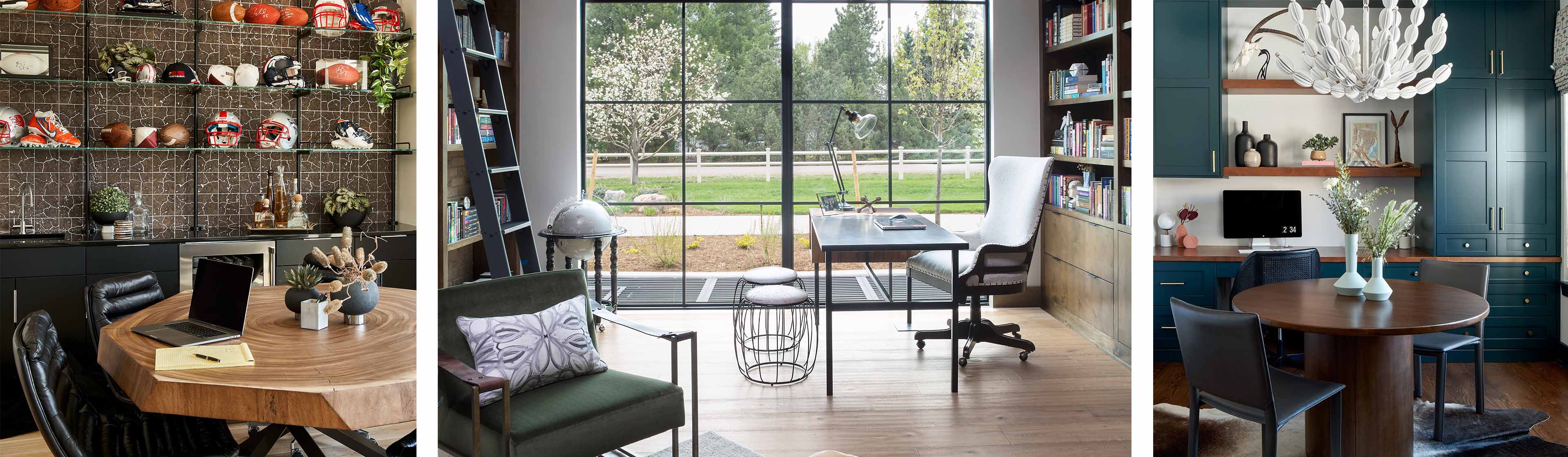
Good office storage should feel integrated into the architecture rather than added afterward. Built-in cabinetry is often especially effective because it keeps the room organized while maintaining a refined appearance.
Some homeowners prefer minimal environments with very little visible storage, while others prefer bookshelves and personal collections that bring warmth and personality to the room. Both approaches can work beautifully when planned intentionally.
The key is balance. The office should feel organized without feeling sterile.
Technology Planning in Modern Home Office Design
Technology is now central to how most home offices function. Because of this, it should be considered early in the design process rather than added at the end.
Many office frustrations happen because electrical and technology planning were overlooked during construction or renovation. Visible cords, weak internet connections, poorly placed outlets, and awkward monitor placement can all affect daily usability.
A successful office considers technology as part of the overall design. Outlet placement, charging access, internet performance, cable management, and lighting controls should all be planned intentionally.
Video calls have also changed the way offices are designed. The camera background, lighting quality, acoustics, and seating position all affect how the homeowner appears during meetings.
Technology should support the room quietly. It should feel integrated rather than visually overwhelming.
Ergonomics and Long-Term Comfort
An office may look beautiful, but it still needs to support the body comfortably over long periods of time.
Poor ergonomics can lead to fatigue, neck pain, back discomfort, and reduced productivity. These problems often develop slowly through small daily habits repeated over time.
Good ergonomic planning does not need to feel clinical. It can be integrated naturally through supportive seating, proper desk height, thoughtful monitor placement, and flexible seating options.
Some homeowners also include standing desks, reading chairs, or small wellness areas to support movement throughout the day. These additions can improve comfort while still maintaining the refined tone of the room.
Long-term usability is one of the clearest signs of successful home office design.
Designing for Flexibility and Future Use
One of the most valuable aspects of thoughtful office planning is flexibility. The way homeowners use their spaces changes over time, and the office should be able to adapt naturally as those needs evolve.
An office used for remote work today may eventually become a library, study, guest suite, or creative studio. Planning for this flexibility helps the room remain valuable long into the future.
Before designing the office, homeowners should consider how often the space will be used, whether more than one person may use it later, and whether privacy or storage needs may change over time.
These conversations help shape smarter long-term design decisions.
The Emotional Impact of a Well-Designed Office
A home office affects more than productivity. It also shapes how a person feels while working.
A cluttered, noisy, poorly lit office can create stress before the workday even begins. A calm and organized office can help the homeowner feel more focused and capable.
This emotional quality matters. Many homeowners want a workspace that supports clear thinking rather than adding pressure to an already full day.
Materials, texture, lighting, and scale all contribute to this feeling. Warm woods, layered lighting, comfortable seating, and integrated storage help create offices that feel polished without feeling cold.
The best offices have a sense of restraint. They do not need excessive decoration to feel complete. They simply need to feel thoughtful and balanced.
Common Home Office Planning Mistakes
Even well-designed homes sometimes overlook office functionality. One of the most common mistakes is prioritizing appearance over usability. A room may photograph beautifully but still fail to support daily work comfortably.
Other common issues include poor lighting placement, limited electrical planning, inadequate storage, oversized furniture, and lack of acoustic privacy.
Many homeowners also underestimate how important flexibility will become over time. An office designed too narrowly around one current need may feel limiting later.
This is why office planning should happen early in the design process rather than becoming an afterthought.
How Home Office Design Supports Long-Term Home Value
As remote and hybrid work continue to shape modern living, office quality has become increasingly important in residential design.
A thoughtfully planned office helps a home feel more functional, adaptable, and future-ready. Buyers increasingly recognize the difference between a true office and a spare room with a desk.
Features such as built-in storage, acoustic privacy, natural light, flexible layouts, and integrated technology infrastructure all support long-term value. These details communicate intentionality and craftsmanship.
For luxury homes especially, the office should reflect the same level of care found throughout the rest of the property.
Home Office Planning
A well-designed office supports far more than work alone. It supports focus, organization, privacy, comfort, and long-term flexibility.
The strongest home office design solutions are grounded in how the homeowner actually lives and works. Lighting, acoustics, layout, storage, technology, and furniture should all work together to create a space that feels calm, useful, and lasting.
Thoughtful home office layout design also allows the room to evolve naturally over time. As work, family, and lifestyle needs change, the office should continue supporting the home comfortably and beautifully.
At The Duet Group, office planning is approached with the same level of precision and care applied to every part of the home. The goal is not simply to create a beautiful office. It is to create a space that supports daily life while reflecting long-term craftsmanship, clarity, and purpose.
To learn more about designing a home that supports how you live and work, contact Duet Design Group to learn more to explore their full-service design and build approach.