A well-planned luxury kitchen design is about more than just how a space looks. It’s about how it works every day, how it’s built, and how it holds up over time. For many homeowners, the kitchen is the most used space in the home, so every decision matters.
If you’re thinking about designing or remodeling your kitchen, it’s important to understand how layout, materials, and construction choices all connect. The right approach can help you create a space that feels beautiful, functions effortlessly, and maintains its value for years to come.
What Sets Luxury Kitchen Design Apart
At first glance, many people assume luxury kitchen design simply means spending more money. They picture professional-grade appliances, custom cabinets, or beautiful stone countertops and think that is what makes a kitchen feel high-end. Those features can absolutely be part of the finished space, but they are not the full story.
What really sets luxury kitchen design apart is intention.
A luxury kitchen is not built around random upgrades or trend-driven choices. It is designed with a purpose from the beginning. Every decision should support the way the homeowner lives, cooks, gathers, entertains, and moves through the space. Instead of asking, “What looks impressive?” the better question is, “What will make this kitchen function beautifully for years to come?”
That shift in thinking makes a big difference.
A thoughtfully designed kitchen should feel easy to use, visually balanced, and highly livable. It should support busy mornings, quiet evenings, family meals, holiday hosting, and everything in between. It should also feel connected to the rest of the home, both in style and in function.
In other words, luxury kitchen design is not just about appearance. It is about performance, quality, and long-term value.
A Luxury Kitchen Is Designed Around Real Life
One of the biggest differences between a standard kitchen and a luxury kitchen is how closely the design reflects the homeowner’s actual lifestyle.
A kitchen should never be designed based only on what is popular at the moment. It should be shaped around daily habits and real needs.
For example:
- Do you cook often, or do you mostly entertain?
- Do two people usually work in the kitchen at the same time?
- Do you need extra prep space for large meals?
- Is the kitchen a quiet workspace during the day as well as a place to cook?
- Do you want the kitchen to be open to the living areas, or do you prefer a little separation?
These questions matter because a kitchen that looks beautiful in photos may still feel frustrating in everyday life if the design does not match how the space is actually used.
That is why a strong luxury kitchen design starts with understanding the homeowner first. The layout, storage, lighting, appliance placement, and materials should all support the way the household functions.
The Best Layout Supports the Way You Live
A successful kitchen layout does much more than arrange cabinets and appliances. It helps the room feel natural and efficient.
In a luxury kitchen, layout decisions are carefully considered early because they affect everything else that follows. A well-planned layout can improve workflow, reduce clutter, and make the room feel more comfortable every day.
For example, a thoughtful kitchen layout should consider:
- How far you need to move between the sink, refrigerator, and cooktop
- Whether there is enough prep space beside key appliances
- How many people will use the kitchen at once
- Where guests tend to gather
- How the kitchen connects to dining, outdoor areas, or a pantry
This is one of the reasons luxury kitchen design stands out. It is not just focused on fitting things into the room. It is focused on how the room will feel and function over time.
A large kitchen does not always work better than a smaller one. In fact, a poorly planned large kitchen can feel inconvenient and inefficient. A well-designed kitchen, whether modest or expansive, should make daily tasks easier and more enjoyable.
Materials Should Be Beautiful and Built to Last
Another defining feature of luxury kitchen design is material selection.
In a high-quality kitchen, materials are chosen not only for their appearance, but also for how they perform. A countertop may look stunning, but if it stains easily or requires constant maintenance, it may not be the right fit for a busy household. Cabinet finishes may appear beautiful at first, but if they do not hold up to frequent use, the kitchen can lose its polish over time.
That is why strong design choices balance beauty with durability.
Common material considerations include:
- Countertops that resist heat, scratches, and stains
- Cabinet materials that hold up to repeated opening and closing
- Flooring that can handle spills, foot traffic, and daily wear
- Backsplash materials that are easy to clean and maintain
- Hardware finishes that age well and feel substantial in the hand
This balance is a major part of what makes a kitchen feel refined. The space should not only photograph well on installation day. It should still look and function beautifully years later.
That long-view mindset is central to luxury kitchen design. The goal is not temporary impact. The goal is lasting quality.
Appliances Should Feel Integrated, Not Added On
Many homeowners think luxury automatically means buying the most expensive appliances available. But the real value comes from choosing appliances that fit the design and support how the kitchen works.
In a well-planned kitchen, appliances feel integrated into the room rather than dropped into it. Their size, placement, and appearance are all considered part of the overall design.
For example, integrated appliances can help create a cleaner and more cohesive visual flow. A refrigerator hidden behind cabinet panels, a well-placed wall oven, or a concealed ventilation system can make the kitchen feel calmer and more intentional.
This does not mean every appliance has to disappear. It means each one should make sense in the larger plan.
When thinking about appliances, good questions to ask include:
- Where will the refrigerator be most convenient?
- Does the cooktop need more landing space beside it?
- Would double ovens improve the way the kitchen functions?
- Is a prep sink useful for the household’s cooking habits?
- Should smaller appliances be stored out of sight but still easy to access?
These details are important because appliances affect both layout and long-term usability. In luxury kitchen design, appliance planning is part of the design process from the beginning, not an afterthought.
Timeless Design Ages Better Than Trends
A true luxury kitchen should still feel relevant and inviting years from now. That is why timeless design matters so much.
Trend-driven kitchens may look exciting in the moment, but they can begin to feel dated surprisingly quickly. A more thoughtful approach focuses on proportion, balance, material quality, and restraint.
Timeless design does not mean plain or boring. It means making choices that have staying power.
That often includes:
- Clean lines
- Balanced cabinetry design
- Natural materials
- Layered but restrained color palettes
- Quality hardware and lighting
- Finishes that complement the architecture of the home
When a kitchen is designed with longevity in mind, it tends to feel more settled and more elegant. It also protects the homeowner’s investment, since major kitchen projects are not something most people want to redo in a few years.
This is one of the clearest ways luxury kitchen design separates itself from trend-focused remodeling. It is not chasing attention. It is building value.
Why Early Planning Matters So Much
One of the smartest things a homeowner can do is make these decisions early in the process.
When layout, appliances, materials, and construction details are considered together from the start, the project tends to move more smoothly. It becomes easier to avoid costly changes, mismatched selections, and design compromises later.
Early planning helps with:
- Better budgeting
- More accurate construction drawings
- Smoother coordination between design and build teams
- Fewer surprises during construction
- A more cohesive final result
This is especially important in luxury kitchen design, where the smallest details can have a major impact on both function and finish quality.
For example, if appliance specifications are chosen too late, cabinetry may need to be revised. If lighting is not planned early, task areas may end up underlit. If storage needs are not discussed from the start, the kitchen may look polished but fail in daily use.
The earlier these conversations happen, the stronger the final kitchen will be.
Layout First: The Most Important Step in High-End Kitchen Design
Why Layout Matters So Much
In any high-end kitchen design, layout is the foundation. Once construction begins, it becomes much harder, and more expensive, to make changes.
That’s why it’s important to get the layout right from the start.
A thoughtful layout considers:
- How you move through the space
- Where you prep, cook, and clean
- How the kitchen connects to nearby rooms
- How natural light enters the space
Popular Kitchen Layout Options
Different layouts work better for different homes and lifestyles:
- Open-concept kitchens: Great for entertaining and everyday living, but they require careful planning to keep things organized and visually clean.
- L-shaped or U-shaped kitchens: These offer flexibility and good workflow, especially when paired with an island.
- Zoned kitchens: A growing trend in high-end kitchen design, these layouts create separate areas for cooking, prep, and even secondary tasks like coffee or beverages.
Moving Beyond the “Work Triangle”
You may have heard of the kitchen work triangle (sink, stove, refrigerator). While it’s still useful, today’s kitchens often go beyond that idea.
Modern kitchens are designed in zones so multiple people can use the space at the same time without getting in each other’s way.
How Design Choices Affect Construction Costs
One of the biggest surprises for homeowners is how much early design decisions impact the final cost. A thoughtful luxury kitchen design helps prevent unexpected expenses later.
Structural Changes
Changing the structure of your home, like moving walls or raising ceilings, can quickly increase costs due to:
- Engineering requirements
- Permits
- Additional labor
Whenever possible, working within the existing structure can help keep the project more efficient.
Plumbing and Electrical Work
Moving key elements like sinks, ovens, or refrigerators can add cost because it requires rerouting plumbing and electrical systems.
For example:
- Relocating a sink to an island
- Adding extra appliances
- Installing custom lighting
Planning these details early can help avoid costly adjustments later.
Cabinetry and Built-Ins
Cabinetry is often one of the biggest investments in a high-end kitchen design.
Costs can vary depending on:
- Level of customization
- Materials used
- Interior storage features
- Finish quality
Well-designed cabinetry not only looks beautiful, but it also makes your kitchen easier to use every day.
Appliance Integration
High-end appliances are designed to blend into the space, but they require careful planning.
This includes:
- Proper ventilation
- Custom cabinet sizing
- Electrical and plumbing coordination
If these details are overlooked, it can lead to delays or additional costs during construction.
Material Selections
Materials like countertops, flooring, and backsplashes all play a role in cost.
It’s important to remember that:
- Some materials cost more to install than others
- Durability matters just as much as appearance
- Choosing the right material upfront can reduce long-term maintenance
Designing for Long-Term Function
A great luxury kitchen design should not only look good on day one, but it should continue to work well for years.
Focus on Everyday Use
Ask yourself:
- Do I have enough space to prep food comfortably?
- Are frequently used items easy to reach?
- Can more than one person use the kitchen at the same time?
Small improvements in layout can make a big difference in daily life.
Smarter Storage Solutions
Storage is one of the most important parts of any kitchen.
High-end kitchens often include:
- Deep drawers for pots and pans
- Pull-out pantry systems
- Hidden storage for small appliances
- Custom organizers for utensils and spices
These features help keep the kitchen clean, organized, and easy to use.
Choosing Durable Materials
Not all materials perform the same over time.
When planning your kitchen, consider:
- Countertops that resist stains and scratches
- Flooring that can handle heavy use
- Cabinet finishes that won’t wear down quickly
This helps your kitchen stay looking and functioning its best.
The Role of Lighting
Lighting does more than just brighten the space: it supports how you use it.
A well-designed kitchen includes:
- Ambient lighting for overall visibility
- Task lighting for cooking and prep areas
- Accent lighting for added depth and style
Good lighting makes the kitchen more comfortable and more functional.
Creating a Cohesive High-End Kitchen Design
One of the most important parts of high-end kitchen design is making sure the space feels cohesive. In simple terms, that means the kitchen looks and feels like everything belongs together. Nothing feels random. Nothing feels out of place. Every detail supports the overall design.
A cohesive kitchen does not mean every finish has to match exactly. In fact, some of the most beautiful kitchens use contrast very well. What matters is that the choices feel connected and intentional. When that happens, the kitchen feels calm, polished, and timeless.
This is especially important in luxury kitchen design, where homeowners are often investing in custom features, premium materials, and a more tailored level of design. When those elements are selected carefully and brought together in the right way, the kitchen feels elevated without feeling forced.
What does a cohesive kitchen design actually mean?
A cohesive kitchen is one where all the visual and functional elements work together.
This includes:
- Cabinet styles
- Hardware finishes
- Countertops and backsplashes
- Lighting fixtures
- Flooring
- Paint colors
- Appliance finishes
- Trim details
- Furniture or seating nearby
Instead of each piece standing out on its own, they work together to create one complete picture.
For example, if you choose sleek, modern cabinets but pair them with overly rustic lighting and highly decorative countertops, the kitchen can start to feel disconnected. On the other hand, when the cabinet profile, material palette, lighting, and hardware all support the same general design direction, the space feels more natural and complete.
Why cohesion matters in high-end kitchen design
Cohesion matters because it shapes how the kitchen feels the moment someone walks into it. Even if a person cannot explain why they like a kitchen, they usually respond to whether it feels balanced.
A cohesive kitchen often feels:
- More spacious
- More organized
- More relaxing
- More sophisticated
- More timeless
This matters in everyday life, not just in photos. A kitchen that feels visually calm is easier to live in. It is easier to maintain. It is also more likely to age well over time.
That is one reason luxury kitchen design should never be treated as a collection of separate choices. It should be approached as one complete environment.
Start with a clear design direction
The first step in creating a cohesive kitchen is deciding on the overall direction of the space. Before selecting finishes or fixtures, it helps to define the feeling you want the kitchen to have.
Ask questions like:
- Do you want the kitchen to feel warm and classic?
- Clean and modern?
- Soft and transitional?
- Architectural and minimal?
- Inviting and tailored?
Once that direction is clear, design decisions become easier. Instead of choosing each item on its own, you can ask whether it supports the overall look and function of the room.
This helps prevent one of the most common design mistakes: choosing beautiful items individually that do not work well together in the final space.
Cabinet styles set the tone
Cabinetry is usually the largest visual element in the kitchen, so it plays a major role in creating a cohesive design. The cabinet style often sets the tone for everything else.
For example:
- Flat-panel cabinets often work well in modern or minimal kitchens
- Shaker-style cabinets can support transitional, classic, or understated spaces
- Inset cabinetry is often used in more tailored or traditional kitchens
- Slab doors with wood grain can bring warmth to a contemporary design
Because cabinets take up so much visual space, their style should feel aligned with the architecture of the home and the mood you want the kitchen to have.
Do all the cabinets have to match?
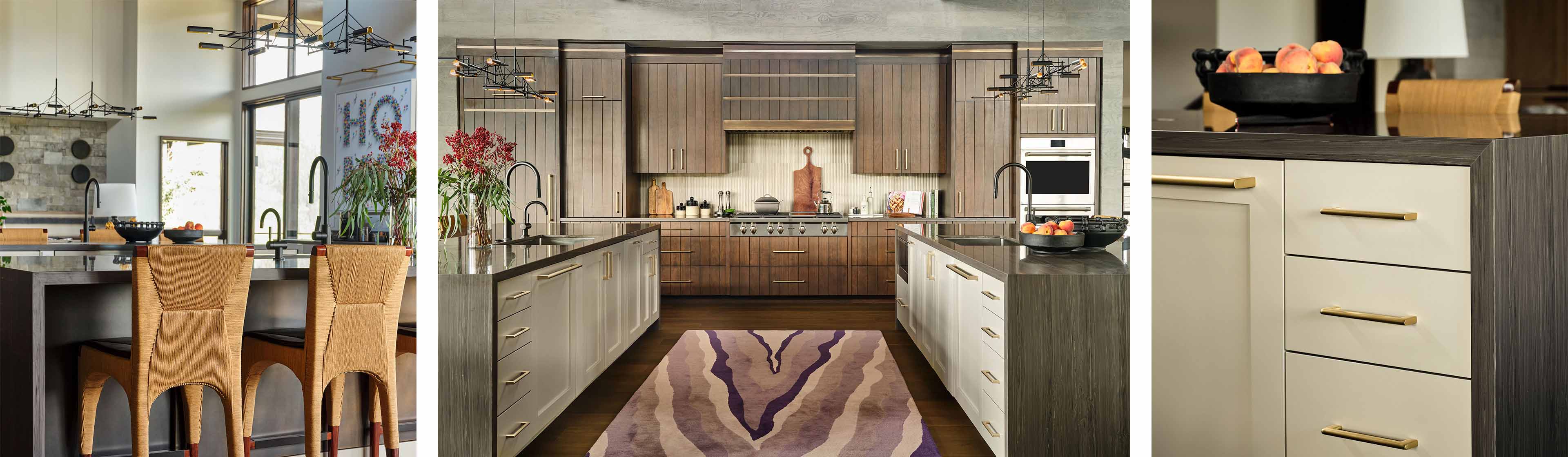
Not necessarily. Many beautiful kitchens use one finish on the perimeter cabinets and another on the island. The key is that the choices still feel related. There should be a clear reason for the variation, not just contrast for the sake of contrast.
Hardware finishes should support the design, not compete with it
Hardware may seem like a small detail, but it can have a big effect on the overall look of the kitchen. Knobs, pulls, and handles are like the jewelry of the space. They should add to the design, not distract from it.
When choosing hardware, think about:
- Finish
- Shape
- Size
- Placement
- Consistency throughout the kitchen
Popular finishes may include unlacquered brass, polished nickel, matte black, bronze, or stainless steel. The best choice depends on the rest of the kitchen.
For example, polished nickel may feel elegant and classic, while matte black may feel more graphic and modern. The goal is not to choose the most popular finish. The goal is to choose the finish that supports the overall design direction.
Can I mix metal finishes in a kitchen?
Yes, you can. In fact, mixing finishes can add depth. But it should be done with care. One finish usually needs to lead, while the second finish plays a supporting role. Too many competing metals can make the space feel busy.
Countertops and backsplashes should feel connected
Countertops and backsplashes often work together visually, so they should be selected as part of the same conversation.
In high-end kitchen design, this might mean:
- Using a natural stone countertop with a matching slab backsplash
- Pairing a quiet countertop with a more textured tile backsplash
- Choosing materials with similar undertones so the palette feels unified
This does not mean the countertop and backsplash need to be identical. But they should feel like they belong in the same room.
For example, if the countertop has dramatic movement and heavy veining, the backsplash may need to be simpler. If both surfaces are highly active, the kitchen can start to feel visually overwhelming.
Should the backsplash match the countertop?
It depends on the design goal. A matching slab backsplash can create a seamless and elegant look. A different backsplash material can add contrast and texture. Both can work well. What matters is that the combination feels balanced.
Lighting fixtures bring the design together
Lighting is one of the most powerful tools in luxury kitchen design, both functionally and visually. It affects how the kitchen works, but it also helps define the style of the room.
Common kitchen lighting may include:
- Pendant lights over the island
- Recessed lighting for general visibility
- Under-cabinet lighting for tasks
- Decorative sconces in select areas
- Interior cabinet lighting for display spaces
Lighting fixtures should feel connected to the rest of the kitchen. Their shape, finish, and scale should support the room’s overall style.
For example, oversized sculptural pendants can look beautiful in the right setting, but they should not overpower the room. In a more understated kitchen, simpler fixtures may create a stronger result.
Do all kitchen light fixtures need to match?
No. They do not need to match exactly. But they should relate to one another. They may share a similar finish, shape, material, or style language. That relationship helps the kitchen feel cohesive.
Color palette matters more than many people realize
Color is one of the strongest tools for creating a cohesive kitchen. Even in kitchens that use neutral tones, small shifts in undertone can make a big difference.
For example:
- A warm white cabinet color may not work well with a cool gray countertop
- A natural oak island may feel beautiful with warm brass but less connected to bright chrome
- A soft taupe wall color may create a more unified look than a stark white if the materials are warm-toned
When selecting colors and finishes, it helps to look at them together in the same light. A material that looks beautiful on its own may feel very different once placed next to cabinetry, flooring, or stone.
Cohesion is also about function, not just style
When people hear the word “cohesive,” they often think only about appearance. But in luxury kitchen design, cohesion also applies to function. A well-designed kitchen should feel consistent in the way it works.
That means:
- Storage is placed where it makes sense
- Appliances are located near the tasks they support
- Traffic flow feels natural
- Lighting supports how the space is used
- The kitchen connects smoothly to nearby rooms
For example, a beautiful kitchen with poor workflow does not feel complete. A cohesive design should support both the look of the room and the way the room functions every day.
How do you keep a high-end kitchen from feeling too busy?
This is a very common concern. Many homeowners want their kitchen to feel special, but they do not want it to feel crowded or overdone.
A few ways to avoid visual clutter include:
- Limit the number of statement materials
- Repeat finishes thoughtfully
- Use contrast with restraint
- Let one or two focal points lead the design
- Avoid layering too many bold details in one room
In many cases, simplicity creates a stronger result. That does not mean the kitchen has to feel plain. It means each detail has room to stand out in the right way.
Why timelessness matters
One of the main goals of high-end kitchen design is creating a kitchen that will still feel beautiful and functional years from now. A cohesive design helps with that because it is usually based on balance and clarity rather than short-term trends.
Trend-driven kitchens can feel exciting at first, but they may date quickly. A more thoughtful, cohesive approach usually leads to better long-term value and a better daily experience.
This is especially important for homeowners who are making a serious investment in their home and want the result to reflect quality, longevity, and care.
Why an Integrated Approach Matters
The best luxury kitchen design projects happen when design and construction teams work together from the very beginning. This is often called an integrated approach, and it can make a major difference in the success of the project.
In a kitchen remodel or new build, there are many moving parts. Design decisions affect construction. Construction realities affect design. When these two sides are disconnected, problems are more likely to happen.
An integrated approach helps:
- Avoid miscommunication
- Keep the project on schedule
- Control costs more effectively
- Ensure a better final result
When everything is planned as one process, the kitchen usually feels more refined, more functional, and more complete.
What does an integrated approach look like?
In simple terms, it means the people shaping the kitchen are working together early enough to make smart decisions before construction begins.
This may include collaboration around:
- Layout and space planning
- Cabinet dimensions and appliance placement
- Lighting plans
- Material transitions
- Structural changes
- Plumbing and electrical locations
- Installation details
Instead of handling design first and then “figuring out” the construction later, the process is coordinated from the start.
Why this matters for layout
Layout is one of the biggest examples of why an integrated approach matters. A layout may look good on paper, but if it does not account for real construction conditions, it can create costly issues later.
For example:
- An island may look properly sized in a drawing, but once appliance doors open, clearance may be tight
- A custom hood design may conflict with venting requirements
- A beautiful cabinet plan may not leave enough room for trim or wall conditions
- Lighting placement may need to shift based on beams or the ceiling structure
When design and construction teams work together early, these issues can be identified and resolved before they become expensive problems.
Why this matters for budget
Does working with an integrated team help control costs? Yes, in many cases it does.
That is because early coordination helps reduce:
- Design revisions during construction
- Delays caused by missing information
- Ordering mistakes
- Conflicts between trades
- Unexpected field changes
Controlling costs does not mean choosing the cheapest route. It means making smart decisions early so the budget is spent where it matters most.
In luxury kitchen design, this can be especially valuable because there are often more custom details, premium materials, and specialized installations involved.
Why this matters for the schedule
Kitchen projects involve many layers of work, including design, permitting, ordering, demolition, framing, mechanical systems, cabinetry, stone fabrication, painting, and final installation.
If these steps are not coordinated well, the project can lose time quickly.
An integrated approach helps keep the schedule moving because:
- Selections are made in the right order
- Trades receive clearer information
- Lead times are considered earlier
- Installation details are resolved before materials arrive
This creates a smoother process and reduces the risk of rushed decisions.
Better communication leads to better results
Miscommunication is one of the biggest reasons projects become stressful. A homeowner may assume one detail is included, while the builder assumes something else. A designer may specify one item, but site conditions may require another solution.
When the team is aligned from the beginning, communication improves across the board. Expectations are clearer. Questions are addressed sooner. Decisions are made with a fuller understanding of both design intent and construction realities.
That usually leads to a better experience for the homeowner and a better result in the finished kitchen.
Designing a Kitchen That Lasts
A thoughtful luxury kitchen design is about making smart decisions from the start. Layout, materials, and construction all play a role in how your kitchen looks, functions, and performs over time.
By focusing on clear planning, durable materials, and a cohesive design, you can create a kitchen that not only looks beautiful but also supports your lifestyle every day.
If you’re planning a kitchen project and want a more structured, thoughtful approach, working with a team that integrates design and construction can make all the difference. To learn more or get started, contact us to discuss your project.